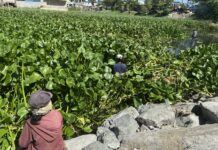













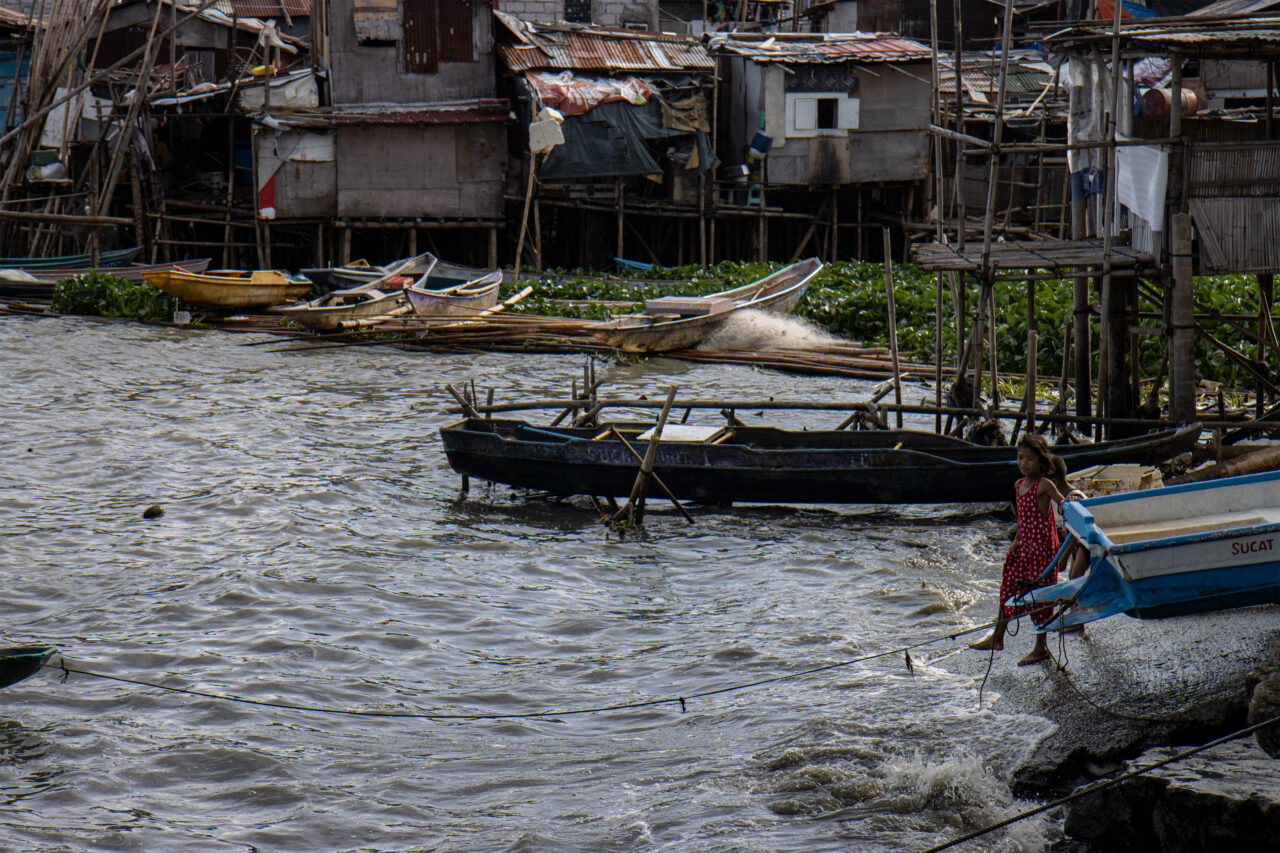
“What happened to the clams? We can’t catch any clams. No matter how we grope with our feet, we can’t find anything. Sometimes we dive, but still nothing.”
Erlinda Coyos, 59, is a clam diver (or manunulya in Filipino) who has lived in Barangay Sucat in Muntinlupa, beside Laguna Lake, for three decades.
She and a group of women from Purok Sais have sought sources of income from the lake out of necessity. Erlinda’s husband, a finishing painter and small-scale fisher, fell ill. A few of the other women are single mothers or grandmothers.
“Our usual buyers are asking, ‘Don’t you have any clams yet? It’s summer now.’ We could not get even enough for our own food,” said Erlinda.
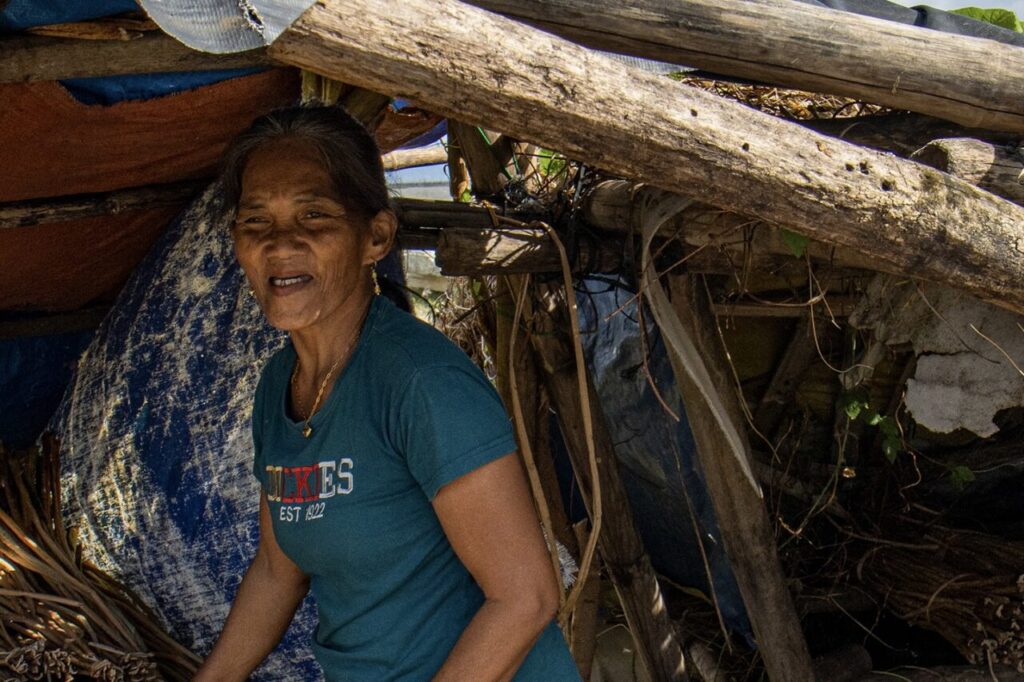
The women—and most other clam divers in the lake—use and prefer this method because it does not require any money. Other livelihoods in the lake are more capital-intensive, such as setting up fishpens or fish cages or building and using boats. Even fishers who swim in the open water and use nets to catch fish (known as mamamanti) must spend on nets.
But this freehand labor is not without risks. Aside from the physical toil, accidents await as they step into murky waters. They endure itching, bites, and other physical discomforts, as well as the possibility of getting sick after wading in some of the most polluted parts of the lake. The worst fear is being swept away by waves, which could be deadly.
The dry season from December to May allows the women to catch freshwater clams (tulya) with their bare hands and feet. While clams are available year-round, the women must wait until the water level recedes. To gather the clams, they submerge themselves in the shallow parts of the lake, feel for clams with their feet, and clamp them with their toes. If the water is only waist-deep, they use their hands to fumble in the water and gather the clams.
“The last time we gathered clams was at the end of May last year. We almost drowned because the wind was blowing hard. We couldn’t grope for clams with our feet because the waves made us drop them or lose our footing. We haven’t been able to catch clams since then,” recalled Erlinda.
Gathering clams in the lake takes them all day. They would start their trek to the lake at 8 a.m. and gather clams until 4 p.m. They brought packed lunches so they could continue working quickly. The clams had to be soaked overnight to spit out grit. They would then sell them on the streets. A full pail of clams could earn them up to ₱1,000 (US$16).
“Just two days of work, and we can already make money. Even if we don’t sell them all, we can serve them to our family. We can make various dishes with clams like tinola and torta,” shared Erlinda.
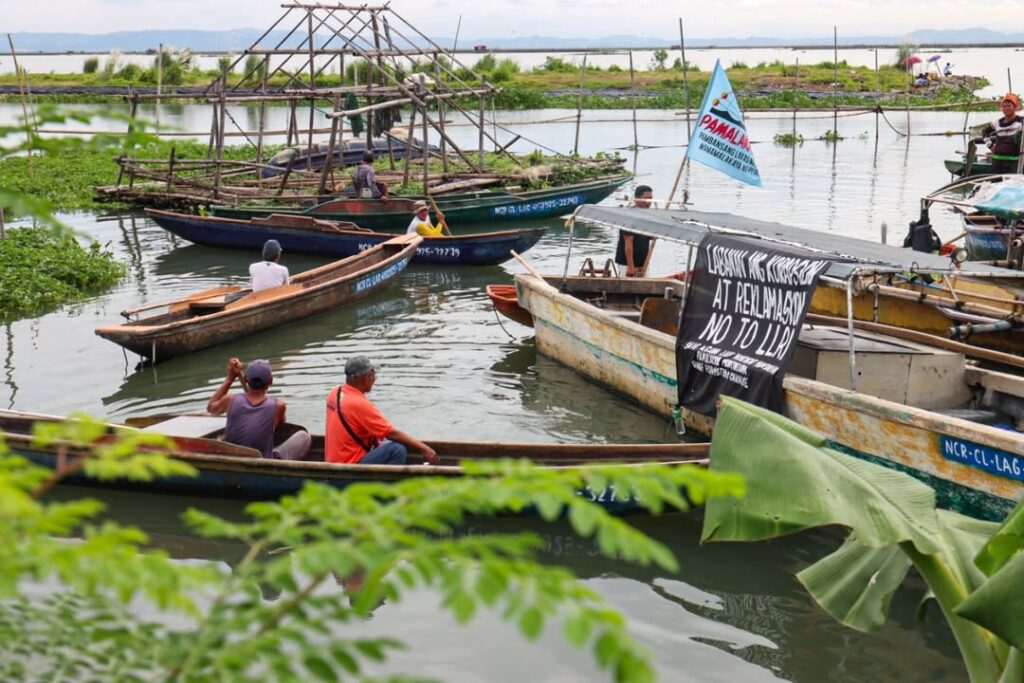
The women had been expecting to gather clams since March. But even after the summer months passed, they could not find any clams in their usual spot. Their usual spot is a 20-minute or one-kilometer walk from their homes to a part of the water between the lakeshore and a long strip of reclaimed land that residents thought would become part of the C-6 road.
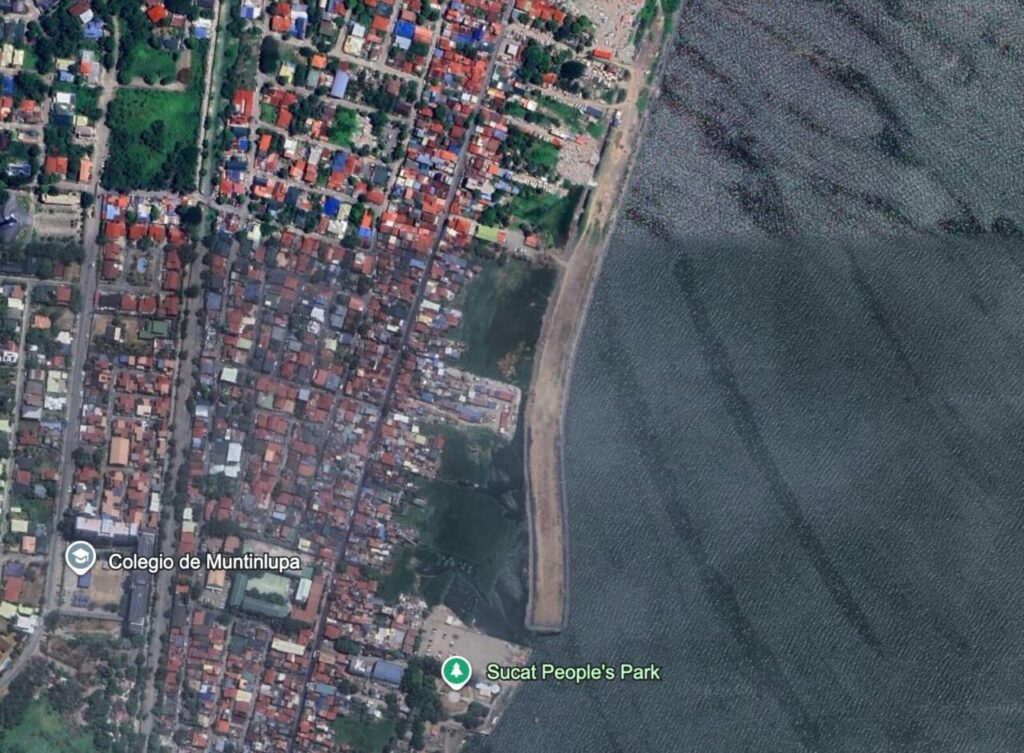
The strip of land, which remained bare after reclamation activities in 2018, is a reminder of an old relocation threat that still lingers. For now, the unfinished structure provides them with an easy route to their place of work.
Other fishers told them they found clams in the next barangay (village), about 13 km away.
“They said there were clams in Tunasan. But it’s hard for us to go farther away. We would also have to ride a boat because the spot is far from the shore. And maybe we’ll be caught in the waves. It seems like we really won’t be able to get clams anymore,” said Erlinda.
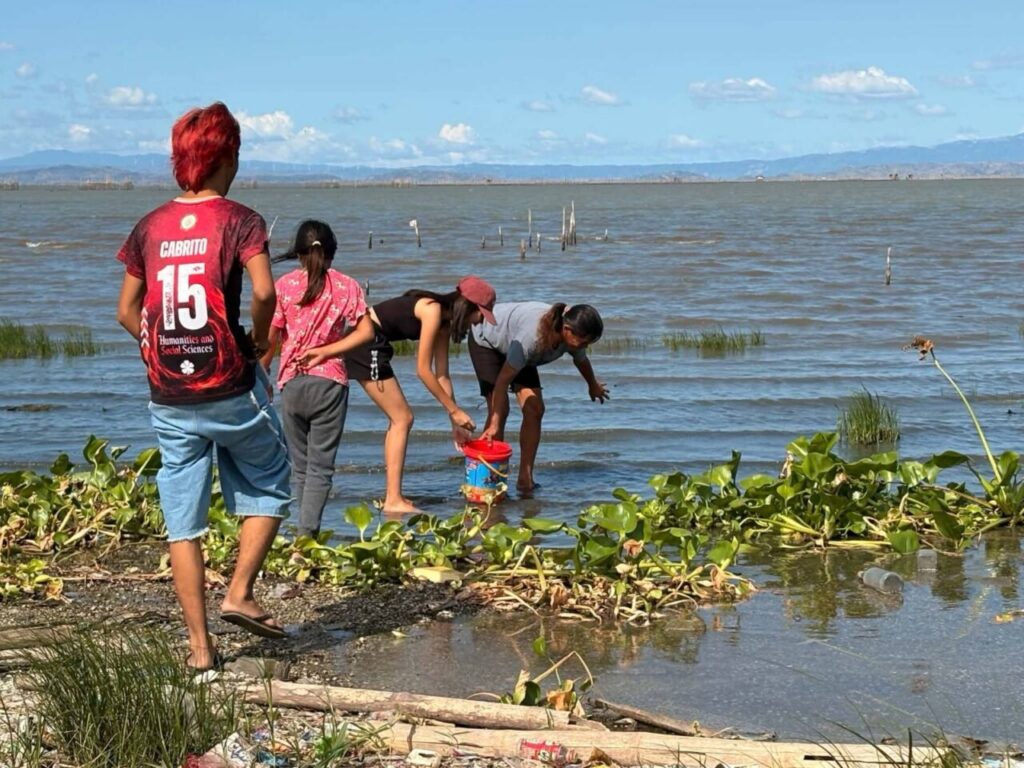
This is the first year that Erlinda and her fellow clam divers were unable to gather clams. They have had to fall back on other sources of income, such as harvesting water hyacinths, doing laundry, or scavenging garbage.
Clams are not the only catch dwindling or disappearing from the lake. Fishers have long felt the impact of declining fish production and fish kills in Laguna Lake. Many studies identify water pollution and poor water quality as major factors. Overcrowding, infrastructure over the lake, invasive species, and siltation also contribute to long-term fish catch decline.
The loss of tulya could further harm Laguna Lake’s water quality. Clams help clean the water of excess nutrients and particulates. Without them, the water becomes turbid and green more quickly, threatening aquaculture (fishpens) and the catch of small-scale artisanal fishers.
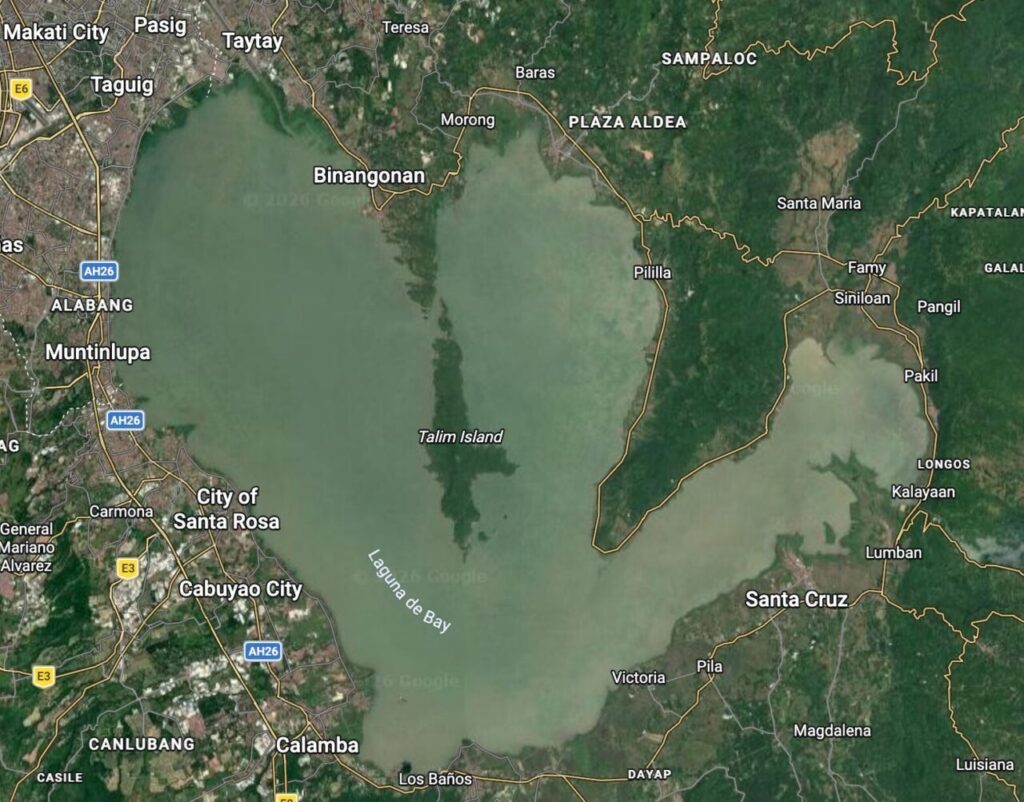
Laguna Lake (or Laguna de Bay) is the largest lake in the Philippines and the third-largest in Southeast Asia. It spans 90,000 hectares (900 sq km) and borders Laguna and Rizal provinces, as well as the cities of Pasig, Taguig, and Muntinlupa in Metro Manila. Around 15 million people live by the lake.
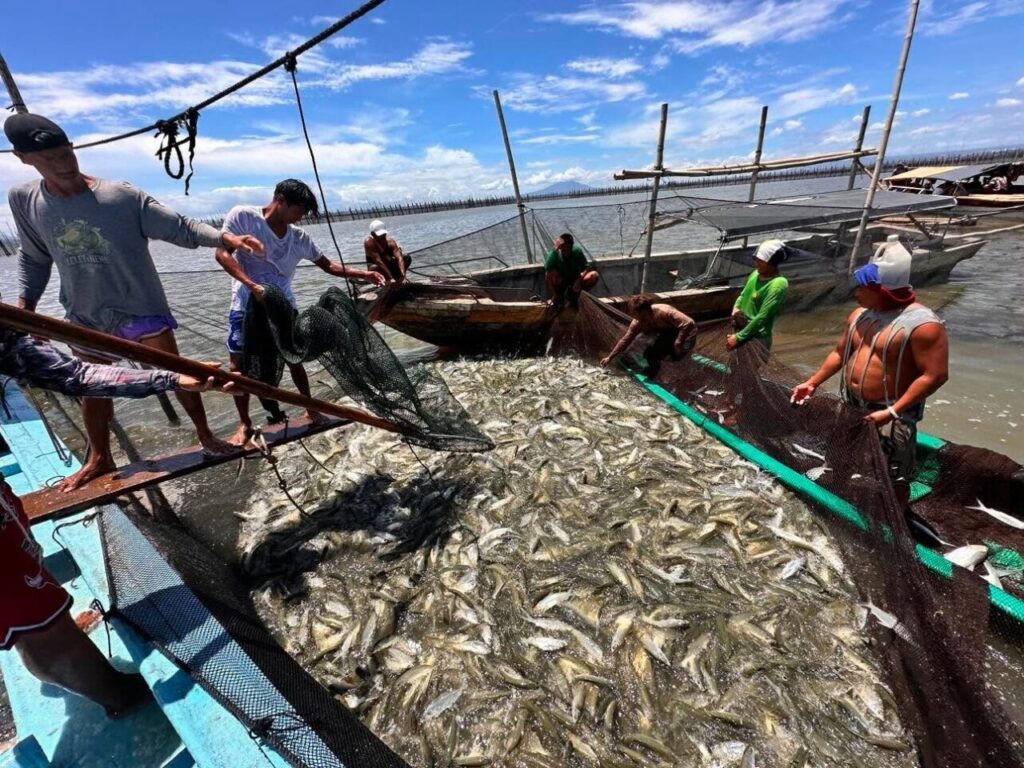
About 25,000 small-scale fishers depend on open-water fishing, while only a few hundred commercial and private operators manage more than 200 large fishpens and cages. The Laguna Lake Development Authority, tasked with balancing environmental protection and socio-economic growth, has logged around 150 fishpen operations under private companies, with the rest divided among cooperatives and individual fishers.
Small-scale fishers, including mamamanti, manunulya, and magugulay, are recognized as the lake’s primary stewards. Subsistence fishing using small boats and traditional methods creates minimal disruption to the ecosystem and allows fish stocks to recover.
Meanwhile, corporations and affluent operators run large fishpens covering vast areas of the lake, some exceeding the previous 50-hectare legal limit (later reduced to 20). Despite a 60:40 policy favoring small fishers, big operators occupy about 47% of Laguna Lake’s 9,200-hectare aquaculture zone. Large fishpens limit open water areas, obstruct waterways, deplete plankton, and reduce fishers’ catches.
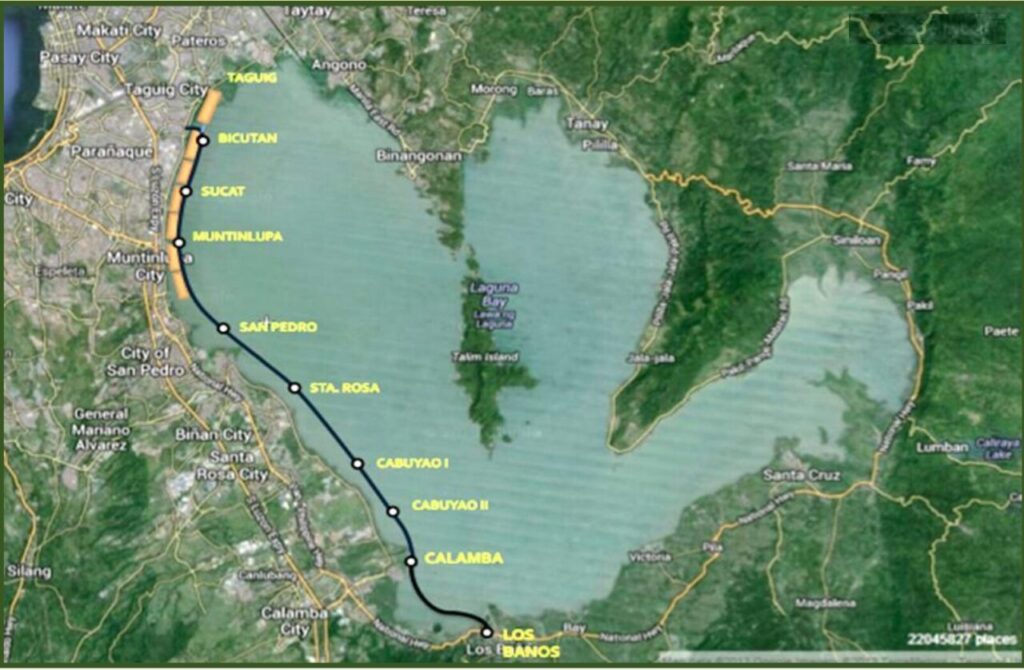
Reclamation along Laguna Lake has been in the pipeline since 2012. The Laguna Lakeshore Expressway-Dike Project (LLEDP), a massive infrastructure and reclamation project, planned a 47-km, six-lane expressway and dike system aimed at easing traffic and flooding. It also involved the commercial development of around 700 hectares of reclaimed land in Taguig and Muntinlupa.
“The government continually launches rehabilitation efforts, but these cannot keep pace with the rate at which the lake’s problems are worsening. They also negate their recovery efforts with planned reclamation, infrastructure, and construction activities in the lake,” said Agnes Payong of Gabriela Muntinlupa.
The Save Laguna Lake Network, composed of fishers and urban poor groups including Gabriela Muntinlupa, has long opposed the LLEDP, arguing that reclamation would displace the poor while worsening flooding along the unprotected lakeshore and trapping floodwaters inland. The fisherfolk group Pamalakaya estimated that 4.9 million people would be displaced by the LLEDP.
The government discontinued the project after a failed bidding in 2016.
But for Agnes, 72, who has lived by the lake for nearly half a century, community resistance was key to stopping it.
“The people, the communities surrounding the lake from the different affected regions, cities, and municipalities, united against the project to defend our homes, our livelihoods, and ultimately, our way of life,” Agnes said.
But another threat that would disproportionately affect small-scale fishers and urban poor has resurfaced with renewed infrastructure plans along Laguna Lake.
The LLEDP was restructured into the Laguna Lakeshore Road Network (LLRN) project in 2021. Phase 1 spans 37.5 kilometers from Lower Bicutan in Taguig to Calamba in Laguna, with key interchanges in Sucat, Alabang, and Tunasan in Muntinlupa. Phase 2 covers 71.45 kilometers from Binangonan, Rizal to Bay, Laguna, with construction expected to begin in 2027.
In 2024, the Asian Development Bank approved a US$1.7B loan for the project. In 2025, the government secured a US$905.26M loan for Phase 1 Stage 1 (Lower Bicutan to Alabang) from the Export-Import Bank of Korea. The contract for Stage 2 (Alabang to Calamba) was awarded in 2025, with completion expected in December 2028. With funding secured, the project is now in full swing after a decade-long delay.
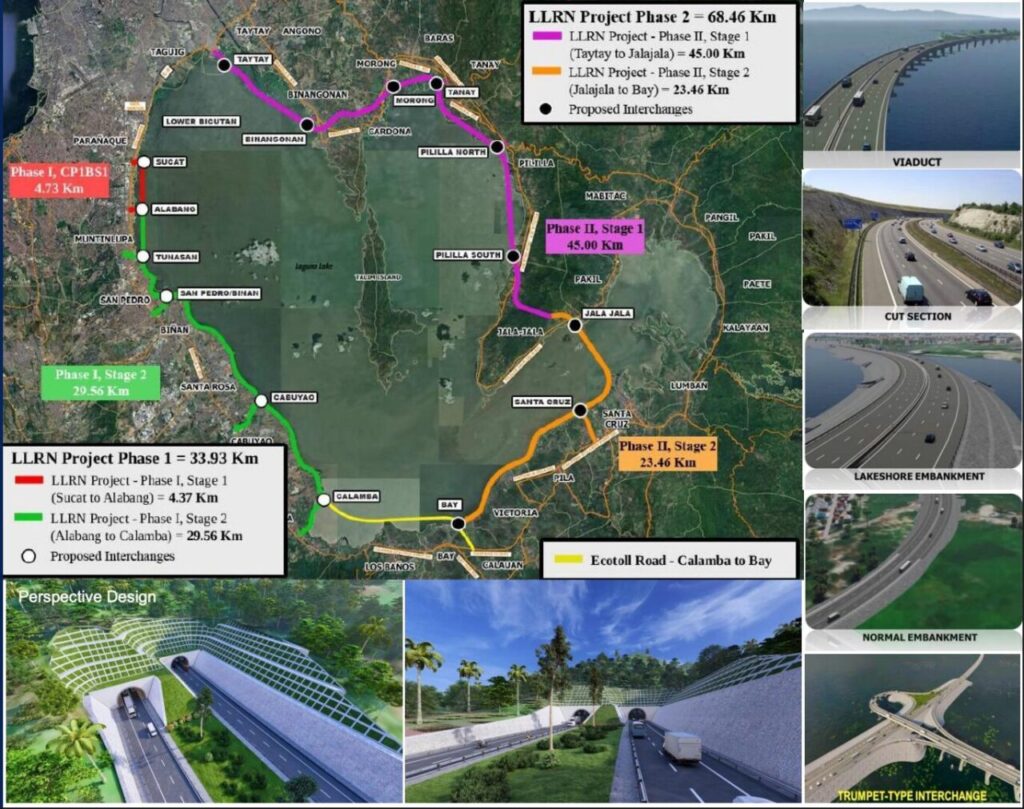
The environmental impact assessment identified severe flooding risks, threats to aquatic ecosystems, and localized pollution as major concerns. Construction and dredging may cause sediment runoff, chemical spills, and ecosystem disruption. The same appraisal noted that these impacts could be mitigated or offset. Various groups, however, flagged a projected 2.06 percent increase in severe flooding within 25 years in the already flood-prone area.
“The expressway that will be built over the graveyard of our communities will not be built for us, but for business, for those who own vehicles, and for the government’s image to foreign lenders and investors,” Agnes said.
The government’s resettlement plans estimate that 1,084 families (4,757 individuals) will be affected. Of these, 681 families will lose their homes, 182 will lose land access or income sources, and 273 are business owners, commercial tenants, or fishery structure operators.
Erlinda shared that the city’s Urban Poor Affairs Office spoke to residents in 2024, informing them of their imminent relocation due to the project.
“If our homes are demolished, if we are kicked out of here, how will we make a living? We might have to find a way to return just so I can continue my livelihood here. We can rent; that will make us poorer, but at least we can work here,” said Erlinda.
For Agnes, the ₱10,000 (US$165) compensation being floated is inadequate—or rather, downright offensive.
“Maybe to the government and the corporations and the foreign funding agencies, they are taking something small from every family affected—a house, a fishpen, a fish cage—compared to the massive project they say will benefit more people. But that small something is everything to us living here by the lake,” said Agnes.
LLRN project Phase 1 right-of-way acquisition and resettlement steps are ongoing.
For those who are involuntarily or forcibly displaced, only land title holders are eligible for socialized housing. However, most Laguna Lake residents are not land title holders, as shoreland areas are considered public domain and therefore state-owned.
Affected persons are given varying entitlements such as cash compensation, monthly rental subsidies, or income-loss assistance depending on their category. Erlinda falls under the non-landowner category—or, in project terms, an informal settler—and may be eligible for replacement costs for her house, which will be demolished.
“We will lose a lot because we are used to this. We are used to our income being enough for us, despite how little,” said Erlinda.
The tiers of resettlement compensation do not—and perhaps cannot—account for intangibles such as residents’ sense of security and the certainty that the lake will always provide.
“We are content here. I hope they don’t bother us anymore. There are many fishers here who know nothing but fishing. In fishing, you don’t have to apply and wait to be hired. You just go with whoever has fishing gear or go to the lake. You can catch fish for food, and you can also earn money,” mused Erlinda.
Agnes stated that they are not against development; only that the poor have always found themselves on the fringes of it.
“The ordinary fishers, the poor, should not be mere pawns in the government’s business deals with corporations and foreign lending agencies. People should be the core of development—not concrete trophies. Human life and the life of the lake should prevail. For what is development if not for the people, especially if it comes at the cost of destroying the world we live in?” Agnes stressed.
—
With additional reports from Agatha Rabino, Czyrene Farrales, Rafael Mendoza, and Roy Barbosa
This story was produced with support from the Asia Pacific Forum on Women, Law and Development (APWLD) Feminist Media Fund for Alumni.