








For families separated by prison walls, Christmas does not arrive with lights or carols. It comes quietly, as a weight on the chest—a reminder of years lost, of hands that could not be held, of fathers and mothers fading into memory. For political prisoners whose innocence is rarely recognized and whose families live far from Metro Manila, the season is often the longest one of the year.
On December 8, Kapatid—a support organization for political prisoners—held the first KaPASKUHAN 2025, a Christmas reunion for political prisoners and their families at the New Bilibid Prison. In a Facebook post, Fides Lim, Spokesperson of Kapatid, explained that the initiative was originally conceived by political prisoner Dionisio “Diony” Almonte, who sought to reconnect families separated for years due to imprisonment, poverty, and, more recently, the looming mass transfer of persons deprived of liberty (PDLs) to far-away penal colonies.
In a letter shared with Kapatid and quoted by Lim, Almonte described the situation plainly: “Bilang na bilang namin kung ilang taon na hindi nakikita, nakakausap, nayayakap ang pamilya. Ang ilan ay kulang isang dekada, sobra sa isang dekada ang iba, at ang pinakamarami ay mahigit dalawang dekada.”
Most relatives, he noted, live in Southern Tagalog, Bicol, the Visayas, and Mindanao. For many, even saving up for bus fare is impossible. And when families manage to set aside a small amount, they often choose to spend it on food or their children’s schooling instead of making the long and costly trip to Metro Manila.
Almonte wrote that their hope for the season was simple: “Ngayong Pasko, sana magkita-kita kami kahit saglit lang.” But he also emphasized the urgency behind the request. “Ang isa pa naming nakikitang dahilan ay ang nagbabadyang plano ng BuCor na ilipat kami sa malalayong kolonya na labas sa NCR,” he said. If the transfers pushed through, families—who already could not afford visits to NBP—would be even less able to travel to penal colonies in Leyte, Mindoro, or Davao. “At kung magkagayon lalo na naming hindi makikita ang aming pamilya dahil sa kalayuan,” he wrote, highlighting the fear that many detainees might never see their loved ones again.
The reunion was therefore conceived not as a large or public event but as an urgent act of reconnection—a chance to bring families together before distance and circumstance could separate them even further.
Tears of joy at the Maximum security compound
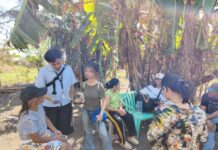
At the Maximum Security Compound, Lim reported in a separate Facebook post that families from Southern Tagalog and Bicol began traveling to NBP before dawn, with some leaving at 2 a.m. to make it in time for the scheduled reunion. Many arrived with only food and a small bag of clothes, relying on transport assistance provided by Kapatid, which covered their one-way fare and later provided return fare and a modest food allowance through donated funds.
Among the reunions described by Lim was that of Elmer Erandio, 40, who had not seen his children—Angel, now 12, and Amer, 11—since they were three and one year old. According to Lim’s account, Elmer wept as he embraced his children, saying, “Masayang masaya ako… Baby pa si Amer nung huli ko siyang makita.” His family had traveled from Daet, Camarines Norte.
Another reunion involved Erwin Sibulo, arrested at 18 and now 40, who was reunited for four hours with his 75-year-old mother, Salvacion. Lim noted that Erwin described his 2003 arrest in Capalonga, Camarines Norte: soldiers said they would only take statements, but he and neighbor Salvador Paladin never returned home. “Sabado nung kunin kami. Lunes, naka-demanda na kami,” he recounted.
According to Lim, Salvacion also spoke about her husband Rogelio, a coconut farmer killed by CAFGU forces in 1980, a loss that intensified the family’s vulnerability in an area long marked by armed conflict.
At the same long table, Erwin’s older brother, Rodel—detained since 2008 with their uncle Domingueto—ate boiled kamoteng kahoy, which Lim described as “a taste of home missed for 17 years.” Lim noted that the Sibulo family name had been repeatedly associated with accusations linked to insurgency, which the family denies. There are three Sibulos in the Maximum Compound, all maintaining innocence.
Lim also reported that Leonora, sister of Salvador Paladin, traveled a significant distance to see her brother for the first time in nearly a decade. Salvador’s wife had since left him, a situation she said mirrors the experience of many detainees who lose family contact due to long incarceration and poverty.
Tears of bitterness at the Medium Security Compound
In stark contrast, the Medium Security Compound experienced what Lim described in the same post as “tears of bitterness.” One of the families affected was that of Annie Arambulo, 50, whose husband, political prisoner Fernando “Ding” Arambulo, 52, has been jailed for 10 years.
Although Kapatid had submitted the names of Annie and her children for visitation, Lim reported that guards initially refused to allow them in. Nimfa Lanzanas, Kapatid Southern Tagalog coordinator, confirmed in an interview that guards told the family that Fernando had already been transported—“Naibyahe na raw siya,” she recalled—prompting Annie to weep at the entrance.
Only after a complaint was elevated to an NBP superintendent was Fernando brought out, and the family was allowed less than 20 minutes together. Lanzanas stated that some items the family brought—shorts, slippers, a small tub, and maintenance medicines—were denied because Fernando was supposedly “for transport.”
Lim’s post also documented that guards restricted food items such as soft drinks in paper cups and required boxed chicken meals to be transferred to other containers. Only half of the medicines Annie had saved up for were accepted. “Pinag-ipunan pa naman namin ito,” Annie stressed.
According to Lanzanas, Fernando told his family he was hoping to be moved to the Abuyog Penal Colony in Leyte, though he was unsure if the transfer would push through. Lim, however, noted in her post that this same penal colony has been a site where political prisoners regularly appeal for rice and maintenance medicines due to poor conditions.
On December 9, Lanzanas followed up and learned that Fernando had not been transported, contradicting the initial statements given to the family. He remained inside, but without basic items—no clothes, no slippers, not even the medicine he depended on, because everything had been withheld the day before.
What the numbers reveal outside the visiting hall
Beyond the immediate frustration and grief inside the Medium Security Compound, the circumstances surrounding KaPASKUHAN 2025 were shaped by a broader climate of fear and uncertainty.
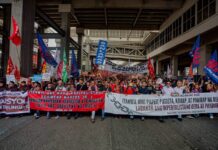
Two days after the reunion, political prisoners across the country launched a protest fasting for International Human Rights Day. Detainees at the Metro Manila District Jail Annex 4 stated that they could not mark Human Rights Day “in celebration,” arguing that the rights enshrined in the Universal Declaration of Human Rights were being violated “more blatantly than upheld.”
This outlined the broader context in which reunions like KaPASKUHAN take place: 134 extrajudicial killings and 14 disappearances recorded in the first half of the Marcos Jr. administration, the steady rise of political prisoners—696 as of November 2025—many of whom were tortured or detained for years on charges that courts later dismissed, and the continued danger faced by former detainees, including two who were killed after their release in Negros.
Such further echoed the same fears raised by Diony Almonte in his letter to Kapatid—that the planned mass transfer of persons deprived of liberty to remote penal colonies would sever what little connection remains between detainees and their families. Kapatid criticized the transfers as treating prisoners “like cattle being herded to remote corrals,” pointing to overcrowded facilities with scarce food, medicine, and medical care. What happened to Fernando Arambulo during the reunion—detention staff claiming he had already been “transported”—was cited as an example of how families are left distressed, confused, and often misinformed.
Beyond the transfers themselves, Kapatid warned that the intensified relocations coincide with the government’s plan to commercially redevelop the New Bilibid Prison’s landholdings in Muntinlupa, raising concerns that these movements are being carried out without sufficient oversight or accountability. The group called for the immediate suspension of mass relocations to penal colonies far from detainees’ families and urged Congress to launch an independent investigation.
The statement also detailed a rise in reported abuses in district jails, including reduced food rations, padlocked fire exits, and degrading searches—conditions that, it said, stand in stark contrast to the comparatively lenient treatment afforded to high-profile detainees accused of large-scale corruption. This wider landscape highlighted how, for many families, KaPASKUHAN 2025 was not simply a Christmas gathering but a fragile assertion of connection amid policies and conditions that continue to keep them apart.
Where hope still finds a way in
Lim expressed gratitude to donors, families who traveled long distances, and the detainees themselves for sustaining the project. She encouraged the public to support Kapatid’s efforts to keep political prisoners connected with their families not only during the Christmas season but throughout the year—by sponsoring travel fares for indigent families, donating food for reunions at NBP and other jails, and preparing “Pamasko bags” for families and detainees, an initiative she attributed to Almonte.
Kapatid accepts in-kind donations such as rice, non-perishable food, and toiletries, which can be dropped off at 1 Maaralin cor. Matatag, Diliman, QC. Lim clarified in her post that toilet paper and paper napkins cannot be accepted, as these clog toilet bowls. Cash donations may be sent via GCASH to 0905 896 1708 c/o Glo Almonte, Diony’s wife.
KaPaskuhan 2025 was presented as a brief window of connection amid systemic hardship. The contrast between the Maximum and Medium compounds illustrated how easily dignity can be restored—or denied—inside prison facilities. For many families who returned home that evening, the event offered only a short reunion, but also a reminder that their relatives are not forgotten.
The initiative continues, with Kapatid calling for public support to sustain as a necessary source of morale and humanity for political prisoners separated from their families for years.


