










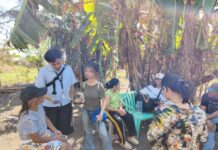




For early childhood, learning often begins with the simplest questions.
One afternoon, Teacher Naia gently holds the hand of a curious student by the gate. She leans down and smiles, asking, “Is it sunny today? Would you like to touch the ground to feel the sun’s heat?”
The child then touched the ground, considered for a moment, and then confidently answered, “It’s hot, Teacher.”
For Teacher Naia, these exchanges capture the essence of Batibot Early Learning Center’s (Batibot) approach. One that grounds lessons in what children observe and experience in their daily lives, always starting from what is most familiar to them.

“We focus on one concept. There’s always an activity, whether it’s an art project, a worksheet, or a game. We add a story to connect everything, and even the worksheets are made by the teachers. The goal is for children to touch, see, and experience things first before moving to more abstract ideas,” she explained.
Unlike typical daycare centers, Batibot is one of the few progressive community-based early learning institutions in Metro Manila. The principle, “from concrete to abstract,” makes these schools remain distinct in the local education landscape.
This approach sets them apart and attracts families seeking progressive alternatives to traditional early childhood education, particularly mothers in low-income communities who need a daycare that can support children with developmental delays.
While most progressive centers lack the capacity for such hands-on support and therapy, Batibot offers that care at a cost they can afford.
Out of a mother’s worry
Alma Barit, a housewife, cares for her youngest daughter, whom she suspects has developmental delays.
To enroll her child at Batibot, Alma needed to secure medical documents and attempted to schedule a check-up at the National Children’s Hospital. But when she was about to go, her husband stopped her.
“He told me maybe I was the one with the problem, not our daughter. He said, ‘Your child is just playful. Maybe you’re the one who needs to be checked.’ He doesn’t believe in these things. So I couldn’t bring her to the hospital. But deep down, I know, my child is still delayed in speech. She needs proper care,” she cried.

Alma feared she had run out of time to join the school. She even asked the teachers if her daughter could be enrolled “even just as a salingkitkit” or a tag-along child so she wouldn’t be left behind. But the teacher assured her there was no such thing. Every child in Batibot would receive equal care.
“I know that she wouldn’t be able to cope in a big school, since there are about 40 students in a class. So I thought, how could a child like mine manage if one teacher has to handle that many children, especially with how restless she is?” she added.
Similarly, another mother, Rochelle Reanzares, 32, echoed the same plight as Alma.
Rochelle had no parents to turn to and no opportunity in her province, especially with her meager earnings at around ₱6,000 a month with no benefits. Such an income barely covers both her needs and her son’s education, safety, and well-being.

Since her son was diagnosed with mild autism, she was advised to consider a private school specializing in developmental delays. But the tuition was far beyond her means, and even the long commute and daily fare made such an option out of reach.
“Since I had him checked before, he actually needs therapy. His condition is mild, but he still needs close attention. Because my salary isn’t enough, I can’t afford to pay for his therapy or other expenses. That’s why while I’m working, I prefer that he be cared for here at Batibot,” she described.
For Alma and Rochelle, Batibot remains the most realistic and hopeful option, relying on its progressive teaching to help their children move forward.
Who gets left behind?
Early childhood care and education (ECCE), as defined by UNESCO, spans from birth to eight years old and is one of the most critical stages in a person’s life. It is during these years that the brain develops most rapidly, laying the foundation for lifelong learning, social-emotional skills, health, and productivity.
Yet children are among the most vulnerable sectors of society, often carrying the heaviest burdens of crises they did not create, according to Norie Larioza, officer-in-charge of Salinlahi Alliance for Children’s Concerns.
In the Second Congressional Commission on Education (EDCOM II), the Year Two Report highlights serious gaps in the country’s early childhood landscape. The report noted the stark inequities in access to early childhood care and development (ECCD), with numerous communities lacking child-development centers and trained personnel, leaving children in underserved areas at a disadvantage.
Research produced by the Philippine Institute for Development Studies (PIDS) also indicates the country faces a gap of approximately 33,000 child development centers, falling short of the estimated 96,000 required to achieve universal access. Not to mention that many young Filipino children, particularly within their first 1,000 days, also do not receive adequate nutrition, hampering both their physical growth and cognitive development.
Families in the lowest socioeconomic groups fare up to five times worse than those in affluent ones for early childhood outcomes, with only 20 percent of children aged three (3) to four (4) attending preschool in 2022.
In light of these alarming gaps, lawmakers have enacted a significant reform in early childhood care and education, drawing heavily on evidence from PIDS research. Signed on May 8, 2025, the Early Childhood Care and Development (ECCD) System Act, or Republic Act No. 12199, seeks to address persistent shortages in nutrition, health services, and early learning for children from birth to age five.
Still, many Filipino mothers like Rochelle and Alma continue to face systemic barriers in accessing affordable, quality learning opportunities for their children. The contrast between hope for educational opportunities and the ongoing challenges faced by these communities highlights their persistent struggles with the gaps that these schools are working to bridge.
Andrew A. Villarba, Chief Education Specialist of the Bureau of Alternative Education under the Department of Education (DepEd), recognized the community-based learning centers that aim to support children.
“It’s essential. As educators, we believe that a child’s foundation should be developed early on. If they’re implementing programs that nurture children from a young age, that’s definitely beneficial,” he said at the media briefing on inclusive education.
From a television program to progressive classrooms
For almost four decades, Batibot has continued to thrive inside the three-storey building in Barangay Industrial Valley Complex, Marikina City.
According to Teacher Libby, Batibot sprang up as a response to meet parents’ need for a safe place to leave their children while providing a space where kids could learn.

The center traces its origins to 1985, built on the foundation of the popular children’s program Batibot and spearheaded by the Philippine Children’s Television Foundation (PCTF).
“They had a community extension services department that visited local communities because television wasn’t yet widespread. But to promote the program, they went directly to the communities,” she recalled.
From these early outreach efforts, Batibot began as a grassroots initiative led primarily by women who sought to identify what their communities were missing.
“At that time, there was no learning center. Parents had nowhere to leave their children, and children had no place to learn. That’s why we formed an association dedicated to early childhood learning,” Teacher Libby recounted.
When Batibot eventually opened its doors to children, the name was adopted for its community initiatives, and it began to be established as a center modeled after the show’s child-focused approach.

From a television program to progressive, tangible classrooms, Batibot has grown into a community lifeline, entrusting children with an education grounded in care and the belief that learning is most effective when it is shared.
Now, the center proudly hosts 25 enrolled children, each with a unique personality and curiosity. It operates on a “socialized tuition” system based on what each family can afford.
“Some children are enrolled under a socialized program, including those whose parents work as pedicab drivers, security guards, or household helpers, and we try to accept them as scholars. For families where both parents are employed, the fee is around ₱20,000 a year, or roughly ₱2,000 a month, which includes books, school supplies, and all other costs,” explained Teacher Lita.
In the mornings, the first floor comes alive with Kinder 1 guided by newly hired teachers Leah and Grace. At the same time, Kinder 2 is under the care of Teacher Libertad “Libby” Dipon, who brings more than four decades of experience in early childhood education, and Teacher Naia.

By afternoon, the focus shifts to the Nursery, which is entrusted to the three new teachers. At times, program coordinator Teacher Lita Malundras, herself a veteran with 30 years in the field, lends a hand across both classes.
They oversee day-to-day learning and embody Batibot’s mission of nurturing children’s development within a progressive, community-driven model.
“We describe it as progressive rather than traditional because we believe that a child’s learning should stem from the collective efforts of teachers, parents, and the community, all working together to raise and nurture children. This is the goal and objective of Batibot,” Teacher Libby stated confidently.
Outdoor activities are just as vital to Batibot’s approach. Holding up a gardening activity book, Teacher Libby shared how the material reinforces the “from concrete to abstract” approach.
“We made the workbook ourselves. We discussed what should be its content, had it printed, and used it to connect what they actually see in the garden with abstract lessons in class,” she said.
Their urban gardening, according to Teacher Lita, is a way of shaping habits at a young age.
“It’s hard to get children to eat vegetables. That’s why we bring them here to plant, clean, and care for the garden. When they experience the process, from seeing the vegetables grow to harvesting them, it becomes a meaningful experience. They realize the value of food, not just as something served on a plate, but as something nurtured,” she described.

But this gardening project is one small facet of their broader work.
Batibot’s foundation focuses on MMS or Makabayan, Makamasa, Siyentipiko (nationalistic, mass-oriented, scientific) curriculum with its five key components—curriculum development, parent education, community engagement, health and nutrition, and income-generating projects—directly responding to a range of troubling early-childhood gaps.
“The community needs to be involved and take ownership of the learning center, viewing it as something that truly belongs to them. They must feel that the school is theirs, and in many ways, it is. They were the ones who started it, and this is why it continues to be cared for and sustained,” Teacher Libby added.
Growth in the two children’s journeys
Both mothers, Alma and Rochelle, share a familiar story: a deep sense of relief and gratitude as they witness their children’s progress after enrolling them in Batibot
“We saw an alarming increase in children with developmental delays. So, we dedicated the afternoon class to the Nursery to make sure these children are fully supported,” shared Teacher Libby.
For Rochelle, the change in her son was something she had long hoped for.
The routine of going to Batibot each day gave both mother and son a sense of structure. She described their mornings, preparing food, often just warming milk if he refused to eat, then walking together to the center.
What mattered most to her, though, was the way the teachers treated her child, making him more receptive in the classroom setting.
“I’m delighted because, in a way, they’ve been a huge help in supporting my child. They never neglect him when I leave my child here, I feel at ease knowing that his being cared for and taught the right things,” she said softly.
During their work period, Teacher Naia sketched out examples of the day’s activity herself, while she and Teacher Libby moved around the classroom, offering support where needed.
Some children could already read independently, while others required closer guidance with their tasks, like Rochelle’s son.

Alma’s story reflected much of Rochelle’s. For her youngest daughter, the shift was just as striking. “She has really learned. Before, at home, no matter what I said, she wouldn’t respond. But now, she makes eye-to-eye contact and follows her teacher here,” she shared.
Her daughter’s daily routine centers around playtime rather than structured activities. She also began to enjoy simple activities like connecting letters of her name or practicing phonics.
“For example, they identify the letters of their name and connect them. I noticed that my child really enjoys that. So I also try to do the same activities at home. It’s the same with reading, they focus on teaching the sound of the letter, which helps the children learn to read faster,” she said.

Over time, Alma saw her daughter’s excitement in learning grow.
“The teachers are excellent and advanced. What’s great about Batibot is that when you enroll your child here, they teach them everything. They train children step by step, until they can stand on their own. They guide the children to really learn each step. I noticed that when you enroll your child here, it seems like their way of thinking becomes broader,” Alma highlighted.
Setbacks shared, hope sustained
For Teacher Libby, the changing landscape of early childhood education is a pressing concern.
“Right now, what we face as early education teachers feels like a step backward. Many children are no longer able to enter good schools, most end up crowded in public schools,” she said.
Her concern deepens when she thinks about what happens once children leave Batibot’s progressive learning environment.
“Yes, they grow here, they learn here. But what happens after? How will they feel valued, how will their rights be respected, once they move to classrooms with around 40 students?” she stressed.
Rochelle, whose child is spending his final year at Batibot, expresses the same worry.
“I feel sad because after this school year, his teachers will no longer be the ones teaching him. I don’t really know where I’ll enroll him next,” she admitted.
Because of this, Teacher Libby never fails to remind parents that their role does not end once their child graduates from Batibot.
“We tell the parents, the way you guide your child here must continue even after. Out there, it will be different, and how children are treated will not be the same. Parents’ guidance becomes even more important,” Teacher Libby emphasized.

And for every child who steps out of the learning center’s doors, they want to make sure the foundation is strong enough to face whatever lies ahead.
“We worry about who will follow in our footsteps because we won’t be here forever. That’s why we nurture the children we teach, our graduates. There must be a next generation. It cannot stop with us. But we believe there will be others who will take on this responsibility,” she added.
Beyond pedagogy, economic realities weigh heavily on the center and its community. “Our population has gone down because many people have lost their jobs. That’s still the main problem, the livelihood of workers,” Teacher Lita explained.
The teachers’ allowance is minimal, primarily supported by the children’s small tuition contributions.
“It’s only ₱8,000. That’s why we make every effort to provide free meals instead,” explained Teacher Lita. “We also try to hire teachers who live nearby, as transportation costs can be challenging. One of our teachers stays here, while the other lives close by.”
“We have been lobbying for a long time, even reaching out to the Mayor, for preschools to receive support from the local government units (LGUs) to cover at least part of the salaries of one or two teachers. Unfortunately, it hasn’t happened yet,” she mentioned.
The question of whether Batibot’s model can be replicated elsewhere often arises. Visitors who come to observe Batibot frequently ask how such a program might work in other communities.
“Many experts have already come here and asked. The key really lies in the community itself. When you start a program like this, the people within the community must hold a deep sense of valuing children. That’s the core,” she pointed out.

Replication, she defined, is rooted in acts of care, activism, and the shared sense of responsibility and collective trust.
“One of the most effective components of a truly progressive early childhood education is the parent and community’s part in nurturing and sustaining it, and I don’t think Batibot would have lasted 40 years without their care and support,” Teacher Libby said.
Just like Batibot, few community-based schools are demonstrating what locally rooted early childhood education can look like, such as Bahay Lunduyan Learning Center in Quezon City; the IFI Church’s Eskwelahan para sa Kamalayan at Kalayaan in Tondo, Manila and Escopa, Quezon City; and the Lumad-led ALCADEV.
Yet despite their efforts, these initiatives struggle to expand due to persistent challenges in promoting accessible early childhood education ranging from funding constraints to outright state harassment.
Learning spaces under siege
Batibot recently spoke out concerning repeated visits by the Philippine National Police (PNP) to its daycare.
“These ‘community outreach’ activities, carried out alongside feeding programs and the distribution of children’s supplies, are an attempt to rebuild its image,” the statement read.
The renewed presence comes after a former police chief was removed from his post over incidents of violence against women and children. “These activities also violate children’s right to privacy, with officers taking photos without clear consent and placing teachers in uncomfortable positions as they feel pressured to comply,” they added.
Such a situation is not an isolated case in the long-standing pattern of state aggression directed at community-based education initiatives. In 2017, in Mindanao, more than 216 Lumad schools have faced relentless attacks since the Duterte administration. Human rights groups lambasted these threats as a systemic attempt to ethnocide.
In Metro Manila, various student groups and schools have also raised alarm over the escalating threat of campus militarization following activities led by the 11th and 12th Civil Military Operations (CMO) Battalions.
Militarization in schools has been documented since the implementation of Executive Order No. 70 under the former Duterte administration in 2018. The said order established the National Task Force to End Local Communist Armed Conflict, which led the “whole of nation” approach to counterinsurgency across both urban and rural areas.
“We know that the issues happening today affect everyone. For instance, there are ongoing calls to address red-tagging, which we all know is a real concern. Through our activities, the community, including the children, can express themselves. We inform them because the children need to be involved. They are the next generation who will carry forward whatever happens now. These issues will ultimately impact them,” Teacher Libby asserted.
A shared, collective effort
For Batibot, child care centers serve not only as spaces for child development but also as avenues to liberate women from the double burden of caregiving, enabling them to participate more actively in community life.
“A child must understand that my mother is a simple worker, yet even a simple worker holds a significant role within the community,” Teacher Lita said.
She noted that teaching in early childhood should recognize that the unequal distribution of reproductive labor predominantly falls on women. This situation persists due to the influence of macho-feudal values and other long-standing social norms in Filipino culture that reinforce gender inequality in caregiving.
“It matters. Most mothers in the community are the ones working, and some fathers feel insecure. Women often experience harm and abuse. They don’t even know where to place themselves. They work all day, then still have to cook for their husbands, who may come home drunk. And of course, our focus is on children’s rights, because many of them carry trauma from what happens at home,” she explained.
At the same time, they help parents understand that raising a child is a shared, collective effort.
“The best way for a child to grow as an individual is not by being solely tied to their parents or guardians but by being nurtured within a community,” she emphasized.

Both Rochelle and Alma resonated with these words.
“Batibot has been a huge help, especially for a child like mine. They reach so many kids, teaching and supporting them. It’s been hard since many schools refuse to accept but here, he finally has a place,” Rochelle mentioned.
Meanwhile, Alma’s experience further demonstrates how beneficial the therapy-like support is. “It’s crucial to have something like this, and I hope it continues. I also wish for it to grow and expand even more,” she said.
“Life is tough, especially for families like ours with a child who has developmental delays. Therapy can be costly and out of our budget. That’s why Batibot is such a significant help. It’s like a school that also provides therapy, allowing children to practice and learn through activities,” she reflected. PHOTO

These progressive schools play a crucial role in bridging the gaps in many communities where public schools have limited capacity and cannot serve all children.
“If every community had the resources to establish a school, it would greatly benefit the children’s development, improve livelihood, and enrich the daily lives of families. That’s how progressive schools genuinely support communities. Over the years, it has become clear that schools like Batibot have been a tremendous help to parents,” said Larioza.
At its core, early childhood education is closely tied to empowering women, supporting families, and ultimately fostering children’s critical thinking skills.
“They can really see the difference in how Batibot handles the children, not just in terms of physical activities, but also in helping them build confidence, stand on their own, make decisions, and become capable and analytical thinkers. This comes from the activities they learn and the interactions they experience,” Teacher Lita emphasized.
“I hope that more children can enroll,” she furthered. “Teaching the children strengthens the bond between parents and their organizations, with the children becoming key to the continued collective movement of everyone.”
This story is supported by the Solutions Journalism Philippines.


