










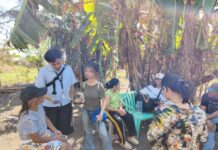




Fishermen often treat the water hyacinth as a pest. The freshwater plants hinder the route of fishing vessels, and they often tangle with hooks and fishing lines, adding another burden to the already arduous and laborious job of fishing.
Yet, for the women of Sucat, Muntinlupa, the water hyacinth does not represent a hindrance but an opportunity and livelihood.
Sisters Erlinda and Florita Coyos of Purok Sais in Sucat have been part of Muntinlupa City’s livelihood program under the Gender and Development Office since 2022. The program focuses on training women in handcrafting dried water hyacinth stems, which are found on ponds along the coast of Laguna de Bay, into woven bags.
But the pair said that they have been handcrafting, long before, in their province of Masbate. They were first taught rattan craft by their blind sister when they were younger, and their hobby of weaving rattan into bags and other handicrafts provided an added profit. Diving into another form of weaving bags turned out to be easier for them because of their previous experience, this time trading rattan for water hyacinth.
The sisters said that the production of water hyacinth bags is possible all year round. Despite factors like temperate weather, they have devised ways to keep harvesting their raw materials enough to tide them over.
During dry season, the water hyacinth pickers harvest stems all day and until the sun sets. Bundles upon bundles of stems were laid out to dry. They spend the dry season harvesting more than they could use to weave. For them, the surplus of dried stems should be more than enough to tide them over when the wet season comes in May to December, when the waters are too high to harvest water hyacinth stems.
Facing limited options and opportunities for livelihood, Erlinda occasionally makes and sell peanut butter and fermented shrimp paste. On the other hand, Florita scavenged through junk to earn a living. The water hyacinth provided a more stable way to make ends meet when their pockets run dry.
However, the DPWH-led Laguna Lake Road Network Project (LLRN) threatens this lifeline. The construction of the road network encompasses the shores of Laguna de Bay. As landfills are dumped on to the shoreline, it will be no surprise that the water hyacinth would be affected during the process.
With the impending project looming over the coastal communities, the sisters hope that this would be not the end of their livelihood. They urge authorities to consider the human and economic cost of LLRN before implementing it. Erlinda said that the water lily pickers and crafters, fishermen, wet markets, communities and all those that enjoy the humble abundance that the country’s largest lake provide during these times of economic scarcity will be the first to be hit should the project continue. The lake that provided them with their livelihood will be changed, and with it, an entire community.


