









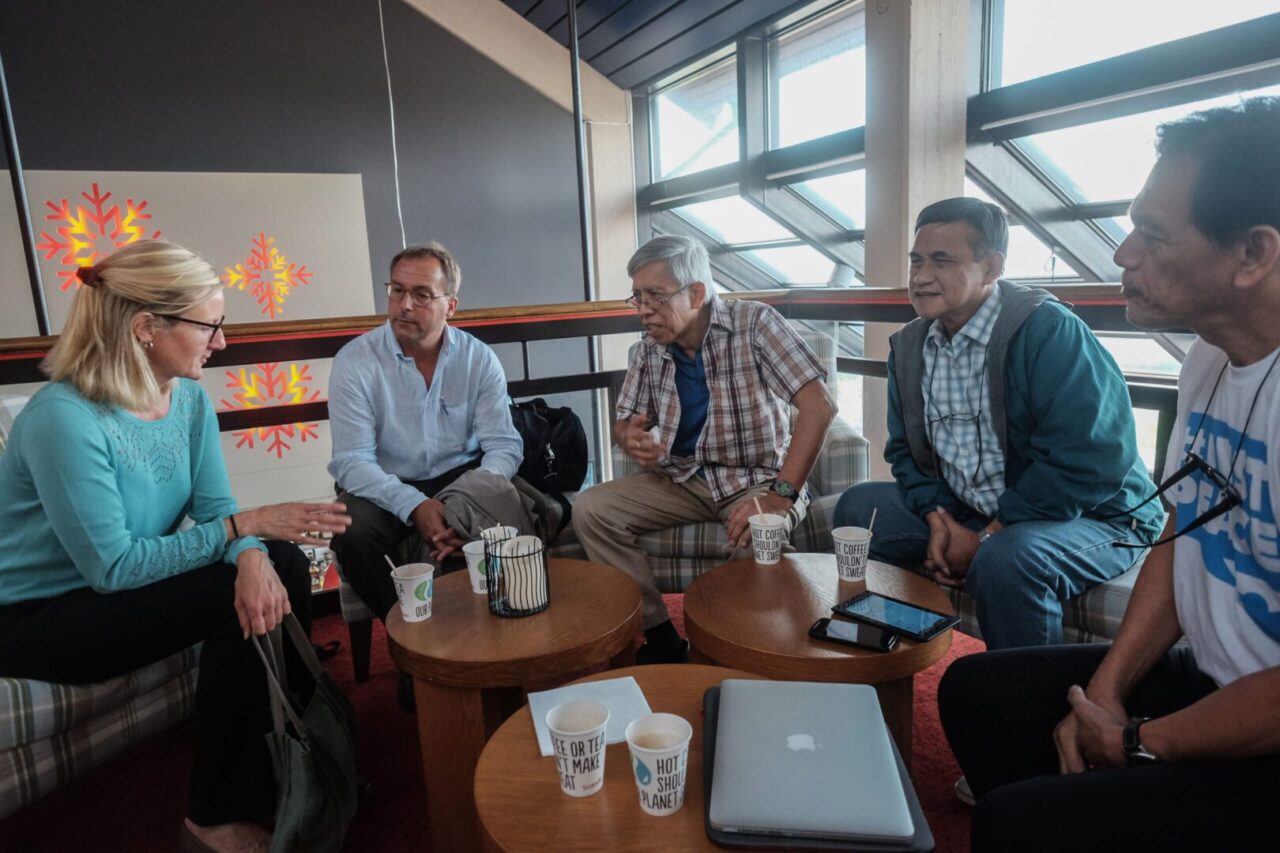
“I had more legroom in jail than in the plane,” riposted Alan Jazmines to his Royal Norwegian Government hosts who inquired about their flight.
Jazmines flew to Oslo, Norway on August 20 with fellow National Democratic Front of the Philippines (NDFP) consultants Renante Gamara, Adelberto Silva, Benito Tiamzon and Wilma Tiamzon for the resumption of formal peace talks with the Government of the Philippines (GPH). They arrived in Oslo in August 21.
“But I can’t complain, it is important to be here,” Jazmines said.
With only almost two months of the new administration of President Rodrigo Duterte, the GPH and NDFP are going back to formal peace tables since the 2011 formal peace talks, which was no longer followed with only a year of the presidency of Benigno Aquino III.
The release of the 22 NDFP consultants were a part of the Joint Statement of the GPH and NDFP in the preliminary talks in July. Also part of the Joint Statement is respect and upholding of previously signed agreements, including the Joint Agreement on Safety and Immunity Guarantees (JASIG) that should have ensured that these consultants were never arrested and jailed.
The consultants were mostly served “alias warrants” and faced charges of heinous crimes that disallowed them from posting bail. Human rights workers have claimed these charges to be false and “trumped up”, especially with most of them being dismissed after years.
But these trumped up charges and the snail-paced legal process in the country have effectively immobilized those who are wrongly jailed. There are more than 500 political prisoners in the country. One NDFP consultant, Eduardo Serrano, died of heart attack after 11 years in prison and with a release order on his cases and only a case or two left that needed to be dismissed.
When the chat turned to sundown and weather in Oslo, the consultants recalled how hot it was inside the jail.

“The ceiling is about two feet above our heads. No other material to reduce the heat but the cement ceiling, so even in the early evening we would still feel the heat,” recalled Jazmines.
“Our beds were this wide,” he added, motioning with his hands a space not wider than his wingspan.
It is the end of summer in Oslo, but temperatures are at 12 to 20 degrees Celsius, similarly “Baguio-weather” in the Philippines.
“Do you have access to running water all the time?” asked their host.
“No, not all the time. Just a few hours a day. We store water in drums and use it for taking baths,” added Silva.
Inside jail, the consultants were exposed about problems inside the Philippine prisons, including the illegal drug trade.
“We were jailed with drug lords and big drug pushers, some of them Chinese,” shared Jazmines.
Silva recalled how the Chinese inmates, accused drug lords, were petitioning the cell where political detainees were staying.
“You already occupied the West Philippine Sea, now you want to take this cell,” Silva repeated their joke at the time.
The bid of the Chinese inmates was unsuccessful.
“They used to rent large houses for around P 50,000 monthly lease. Now they operate inside the jail with free rent and food and they said inside the jail, they are even ‘protected’,” shared Silva.
“But probably the biggest source of corruption in the prisons is the food budget. The biggest allocation is food,” mused Jazmines.
Renante Gamara said an inmate’s health would deteriorate if one would rely soley on the food rations inside the prison.
“We were served macaroni soup with a piece of meat this size,” said Gamara, showing a third of his finger.
“Lunch would be rice and fish the size of your little finger,” he added.
The political detainees’ meager rations were augmented with food and supplies from their families, human rights organizations and supporters.
The consultants were able to walk free after posting bail in the various Regional Trial Courts where their cases have been lodged. The GPH part in the releases included not opposing the motion in order to facilitate the speedy release of the consultants and the speedy release of travel documents, but other procedures were almost as regular. A huge team of lawyers, paralegals and human rights workers had to work day and night for two weeks to accomplish the release of the political prisoners in such a short time.
Peace talks would have been moved once more if the releases did not come through. (Read Peace talks postponement looms anew as no political prisoners released)
Talks of the consultants having only six months outside jail before they were returned to jail have been heard.
When asked about this, “if for the JASIG, we should not have been jailed in the first place,” responded Silva.
As the release of the consultants are being processed, some of them received new subpoenas or were indicted in new cases.
“We would just continue to work for peace,” said Jazmines.


