








The name Sakay once thundered across the vast lands and mountains of Luzon in the early 1900s.
Macario Sakay, the revolutionary who fought for a republic unrecognized by his colonizers. More than a century later, another Sakay stands beneath a different sun. His weapon is not the bolo but the plow, his battlefield not the mountains but the fields of Hacienda Luisita.
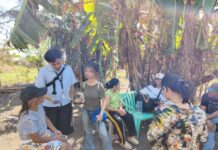
Ronald Sakay, a farmworker and organizer, speaks of a revolution that has never quite ended. His words are heavy with fatigue but sharpened by conviction: “Kaya kami nandito ngayon upang ihiling at ipabatid sa ating gobyerno ang malawakang pagko-convert ng mga lupain sa loob ng Luisita.”
In these broken yet burning words, one can hear both lament and defiance—the echoes of an old struggle reborn in another Sakay.
The unfinished land
Inside the 6,453-hectare Hacienda Luisita, Ronald recounted how these hectares that once tilled for palay now bear the scaffolds of industry.
“Nandiyan yung Aboitiz, nandiyan yung Ayala… itatayo yung pabrika ng Coca-Cola,” he stated. “Nagbibigay ‘yan ng kamatayan, ng pagkasira ng aming sakahan.”
From the land that once grew sugarcane now grow fences and factories. Their lands are being parceled into solar farms, commercial estates, and private roads. For Ronald and his fellow farmworkers, every steel beam rising from the ground feels like a nail in the coffin of their livelihood.
“Yung lupa, walang tutubong palay. Hindi namin masasaka dahil mainit ‘yung solar farm,” he expressed. In the name of progress, the fields are left barren—too hot to till, too costly to own.
It has been over a decade since the Supreme Court’s 2013 final and executory decision to distribute Hacienda Luisita’s land to its farmers. Yet, Sakay lamented, “Hanggang ngayon, hindi pa namin natatanggap ang titulo ng lote.”
For him, each unissued title is another betrayal by a system that calls itself democratic but continues to kneel before landlords, oligarchs, and corporations.
Branded as rebels in fields that remember
At another time, Macario Sakay was called a bandit by the American colonial government for refusing to surrender the republic’s cause. He was hanged in 1907, condemned as a criminal rather than honored as a patriot. Ronald Sakay, though born in another century, faces a similar kind of persecution. Only now it comes not from foreign rulers but from his own countrymen in uniform.
“Tinanong kami kung aktibo kami sa Alyansa ng Manggagawang-Bukid sa Asyenda Luisita (AMBALA),” Ronald recounted, referring to their local farmworkers’ alliance.
“Sabi namin aktibo kami. Pero bakit? wala naman kaming ginagawang labag sa batas,” he added.
Yet this assertion of rights has made him a target. Soldiers would frequent his home and ask questions that sounded more like warnings. Meanwhile, two of his fellow leaders have also been red-tagged and silenced by fear.
His struggle exists in a landscape that has seen generations of revolt.
In 2004, seven farmworkers were killed in a massacre. Their blood soaked the same soil that now hosts industrial construction. Twenty years later, the memory persists in whispers among farmers who remain landless despite the law’s promises.
“Imbes na suportahan ng gobyerno ang mga magsasaka, kinukurakot nila ang pera para sa flood control o proyekto,” Ronald said.
Even their collective efforts at bungkalan, the community-based cultivation of idle land, are under threat.
“Mayroon kaming bungkalan sa Barangay Balite, anim na ektarya ‘yon, tinamnan namin ng gulay. Pero hindi namin alam kung mabubuhay ‘yon dahil wala kaming pambili ng pataba,” he explained. Without fertilizer, subsidy, or protection, their harvests wither alongside their hope.
Still, they plant. Because planting, for Sakay, is not only survival but resistance.
A revolution’s echo
Like their namesake, the Sakays waged a war of dignity against the powerful. The elder Sakay raised the Katagalugan flag when the republic was declared dead. The younger Sakay tills the soil of Luisita as agrarian reform becomes a hollow promise.
Ronald believes that the answer lies in collective action. “Panahon na para sa isang rebolusyon para baguhin ang bulok na sistemang ito,” he stressed.
“Kailangan nating magkaisa, Tapusin na ang paghahari ng mga elitista at mga kurakot,” he added.
A century after Macario was executed, his spirit rises again in the second Sakay. This time, in the figure of Ronald who refuses to bow to landlords or generals. The revolution may no longer wear the colors of the Katipunan, but in the furrows of Hacienda Luisita with its pulse that still beats.
“Kung hindi kami magbubungkal ng lupa at hindi namin ipaglalaban ‘yan, mawawalan kami ng kabuhayan,” said Ronald.
And for as long as there are Sakays who stand their ground, these fields will never be forgotten. The fields will remember.


