













STS was implemented as a response to the student’s criticism of STFAP having a very tedious process wherein the students have to accomplish a 14-page application form, stand for hours on a long queue, and end up with an erroneous or mismatched bracket assignment. But with the new STS, Pascual boasts the 2-page application form and lesser number of indicators from four to two. Nevertheless, in both tuition schemes students are assigned into one of six brackets (A, B, C, D, E1, and E2). Designated brackets are assessed through the income tax of parents or guardians and socio-economic indicators such as number of cellphones, appliances at home, utility bills, and even toilet facilities.

In the maiden implementation of the socialized tuition in 1989, students were divided from 1 to 9 with each having a corresponding amount of tuition to be paid. Those assigned to Bracket 1 will enjoy a free tuition and a semestral stipend while Bracket 9 will have to pay the full amount of the University’s current tuition rates. Since the implementation of such tuition scheme, tuition rates have skyrocketed from P40 to P1,500 or a whopping 3650 percent increase.
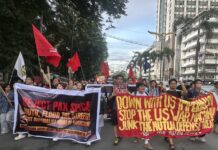
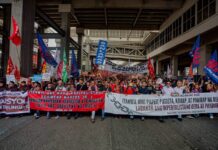
The Office of the Student Regent (OSR) for years has been consistent in its position against any form of socialized tuition scheme as reflected in its position papers and protests inside the campus. According to the OSR, “the ideology behind the socialized tuition policy is detrimental for the students and for the state university. From the very beginning, the OSR has been critical of the ideology behind the so-called Socialized Tuition Scheme. Having students pay for their tuition based on their perceived capacity to pay reflects a skewed logic, subjecting UP education to the whims of market forces and treating UP as a private enterprise rather than a public service institution.
The Student Regent at the time of the launch of STS, Krista Iris Melgarejo also stressed in her statement that the said procedural improvements in STS compared to STFAP only benefit the implementers, and certainly not the students. “They (students) might not be required to send other supporting documents but it does not mean that their plight will be lessened. The simplistic forms actually constrict dynamic and flexible decision-making in assigning the brackets on the administration’s part,” said in the statement. Melgarejo also pointed out that the “black and white result brought by the forms does not mean that the applicants will get their desired and actual bracket.” Which has happened indeed as reflected in the widespread online outburst of the UP students on the twitterverse.
[quote_center]State universities desperately finding means to generate income resort to sponsorships, donations, and land leasing which would eventually transform the schools into semi or fully corporatized ‘academic’ institutions[/quote_center]
Not just a case of UP, but a National Policy
With President Noynoy Aquino’s Roadmap to Public Higher Education Program Reform (RPHER), State Universities and Colleges (SUCs) are being pushed towards self-sufficiency and fiscal independence. In fact on the 2013 budget message of Aquino, he said that a generic socialized tuition fee scheme for all of SUCs like UP will be initiated and piloted in 10 SUCs this year. As a result, lesser budget is being allocated to education and consequently, students have to catch the burden from these successive budget slashes through tuition increases. State universities desperately finding means to generate income resort to sponsorships, donations, and land leasing which would eventually transform the schools into semi or fully corporatized ‘academic’ institutions. But as UP College of Mass Communications Student Council Chairperson Beata Carolino puts it, “STS is plainly a smokescreen to UP’s lack of budget.” According to her, “it tolerates the systemic abandonment of public services particularly education by letting the students and their parents shoulder what the government neglects.”
Faye Denna already got the result of the letter of appeal she sent to the Office of Scholarship and Student Services regarding her bracket assignment, the office said that it had reviewed her case and now reassigned her to Bracket B which is just P500 less from Bracket A’s P1,500 per unit tuition. The problem of Faye Denna sooner or later should there be no action done regarding this ‘commercialization’ of education will be a problem of all the rest of the poor Filipinos wanting a college education and the #BracketAKaNa twitter hype will simply change to other forms because whatever the letters be in those tuition schemes the fact that the education is still costly in the country, remains. ###


