






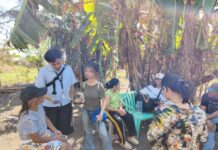


(Photo from Valenzuela City Mayor Rex Gatchalian Facebook page.)
On April 15, Valenzuela City Mayor Rex Gatchalian relayed that five (5) persons under monitoring (PUMs) in the city tested positive for COVID-19. The mayor found this alarming since “PUMs are last priority” in the Department of Health (DOH) guidelines on who to be tested.
“Relayed to DOH my observations that for me is alarming. The 5 that tested positive are all PUMs (using the old categories of DOH). In the new category of DOH the PUM category is the last priority in the hierarchy of [swabbing]….pero when we [swabbed] nag positive sila. By not testing PUMs are we not in danger of releasing potential carriers into the community that may lead to contagion,” said Gatchalian.
Before and up to April 14, the scheduled start of the government’s massive testing, its protocols and label for testing have changed from “massive” testing PUIs and PUMs and health workers to “expanded” where those “most at risk for COVID-19 will be prioritized” as prescribed by DOH Department Memorandum 2020-0151, and reiterated by Department Circular No. 2020-0179.”
The DOH identified two subgroups for expanded testing according to priority: (1) patients or healthcare workers with severe or critical symptoms and history of travel or exposure, and (2) patients or healthcare workers with mild symptoms, relevant history of travel or exposure, and considered vulnerable (e.g. 60 years old or older, has other illnesses such as hypertension and diabetes, or is immunocompromised).
Valenzuela targeted mass testing
On April 11, Valenzuela started its “targeted mass testing” with PUIs, PUM and frontliners in the city.
Gatchalian said Valenzuela is the first LGU to do local mass testing for target populations, such as PUIs, PUMs, OFWs and frontliners. The city will conduct free swab tests for The Medical City in Pasig to process, with results expected after two days.
By April 15, the LGU signed an agreement with Detoxicare Molecular Lab for the processing of our test kits. The second lab will process 90 samples a day for the city, in addition to the 25 slots per day they have with The Medical City. With these two lab partners, the city expects to have 115 samples per day tested, targeting to finish testing PUIs and PUMs by April 19, and then proceed to test frontliners next week.
By then, the mayor expects to “get a clearer picture of the status of the city.”
On that same day, the mayor relayed that they received 2nd and 3rd batch of results of their mass testing from The Medical City where 5 PUMs of 40 tested positive. The houses of these positive cases have been placed on lockdown and the city committed to provide the medical intervention they need.
The city also collected swab samples of their homeless in their temporary homeless shelter, the Pisces Resort on April 16.
The city announced also free COVID-19 testing for all dialysis patients in the city on April 17.
By April 18, the mayor said testing kits in the city will be used to test all the city’s frontliners, starting with those in the emergency hospital.
On April 19, Mayor Rex Gatchalian explained that the testing process in the city uses real-time reverse transcription-polymerase chain reaction (real-time RT-PCR) as “one of the most accurate laboratory methods for detecting, tracking, and studying the coronavirus.” The city chose the RT-PCR test kit because it’s the gold standard for COVID-19 testing and detection.
“The city bought the swab kits and extraction kits, our CESU med techs will collect the oropharyngeal and nasopharyngeal swabs from the patients, and then transport the samples to our partner labs, The Medical City and Detoxicare Molecular Diagnostics Laboratory, Inc. for processing. The labs will forward the results to CESU within 48 hours (2 days turnaround time),” explained the mayor in his post.
Local government units in the National Capital Region (NCR) have initiated their own mass testing by second week of April, also the original end of the month-long lockdown on April 12 for Luzon and 14 for NCR. The mass testing in Metro Manila LGUs are mostly swab collection, and will be processed in the DOH-accredited labs that will be loaded in the country’s around 4,000 tests per day capacity.


