





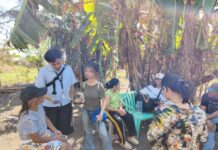

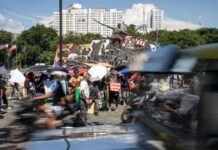


The Mamamayang Ayaw Sa Anomalya, Mamamayang Ayaw Sa Iligal Na Droga (MASA MASID) project of the Department of of Interior and Local Government (DILG) came to the public attention after already a year’s implementation when drop boxes for citizen feedback for the war on drugs were installed in various barangay halls.
In an interview with Manila Today, the DILG said that following a recent Senate hearing on the DILG budget, the inclusion of drop box in the list of modes of feedback is being reconsidered and is possible to be removed. But an official memorandum has yet to be issued regarding this development on the implementation strategies of the project.
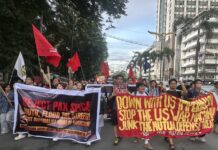
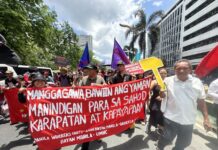
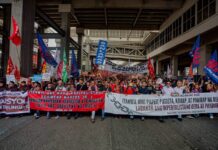
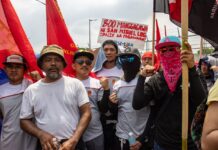
Opposition to the drop box
These drop boxes were thought to be used as a ‘fishing expedition for illegal drug suspects and even innocent people.’
Human rights advocates and people’s lawyers were quick to react to the drop boxes when it was revealed at the beginning of October.
“The Department of Interior and Local Government (DILG) and the police are essentially re-creating a hit list, and they are asking everyone to write it for them,” said Karapatan Secretary General Cristina Palabay.
“It is another draconian snowball in the avalanche of dangerous shortcuts to fight crime and drugs. We might as well have drive-thru counters for good measure,” said National Union of Peoples Lawyers President Atty. Edre Olalia
Asked for a response to the reactions to the drop box, the DILG said they would be “very pleased to meet with these concerned groups and individuals so we could inform them properly about the rationale and objectives of MASA MASID.”
“We welcome these criticisms coming from concerned citizens and organizations. It is their right to air any concern they have about any government project, and file legal action against it should they deem necessary. On our end, we treat these comments on the project as constructive inputs that we see would help develop the project into a better initiative that will benefit communities.
The MASA MASID program, according to its own rationale, “promotes community involvement on corruption, illegal drugs, criminality, violent extremism and other threats to peace and security.”
Drop boxes for citizen feedback, not for submitting names of drug suspects
The DILG also said, “the setting up drop boxes was only one of the modes of feedback under the Feedback Mechanism strategy. It was never meant for fishing names of suspected illegal drug users or pushers. Instead, they were meant to solicit information on any community concern that the government ought to respond to in order to maintain peace and safety in the community. This concept is not new or unusual. Drop boxes are common among banks, private organizations and even government agencies like the Civil Service Commission to get feedback on how they are faring in the delivery of their services.”
When the MASA MASID program started in 2016, the hotline was the only form of feedback laid out in its guidelines.
Asked why the drop boxes were included among other new feedback forms in the Revised Guidelines in 2017, the DILG said, “The addition of drop box in the modes of feedback was a manifestation of inclusivity as other members of the community may not have access to electronic means of communication. It was included in the revised memorandum circular after it was floated in a multi-stakeholder workshop on MASA MASID. It was one of the four modes of feedback, the other three being a local community hotline, electronic mail, and a dedicated number for text messaging.”
Feedback mechanism is one of two implementation strategies of MASA MASID. The other strategy is advocacy and education campaign. The community-based rehabilitation program was dropped from the implementation strategies.
As for the process of validation of information submitted to the drop box, the DILG said the process shall go through the various levels of the volunteer network of MASA MASID.
“Any information coming from the community is submitted for assessment to the MM Technical Working Groups (TWG), which is composed of the following: City/Municipality (C/M) DILG Field Officer; C/M Administrator or any Department Head designated by the Local Chief Executive; C/M Chief of Police; Liga ng mga Barangay C/M Chapter President; and one representative from Faith-based Organizations (FBO), CSO, C/M Anti-Drug Abuse Council, and C/M Peace and Order Council.
Volunteer network
According to the DILG, there are 127,959 Filipinos nationwide who have registered as MASA MASID volunteers and 95% of the cities and municipalities across the country have organized their respective MASA MASID TWG.
At the barangay levels, about 91% of the 42,036 barangays across the country have also organized their respective MASA MASID Teams (MMTs).
The MASA MASID is a DILG project included under the General Appropriations Act (GAA) of 2017.
National Democratic Front of the Philippines Chief Political Consultant Prof. Jose Maria Sison, meanwhile, made the observation that the MASA MASID as well as the Kilusang Pagbabago would serve as the political base and spy network of President Rodrigo Duterte’s administration.


