

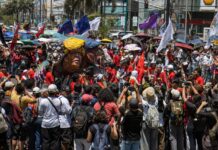
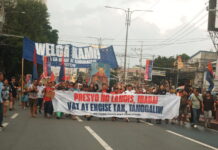
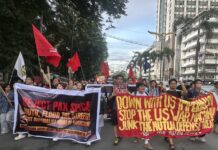
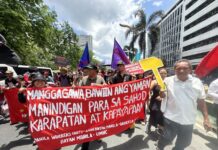






First came the denials: no tear gas, no deaths, just “maximum tolerance,” officials claimed. But as harrowing footage of torture and bloodied streets spread across social media, national and local authorities in Manila came up with tactics to whitewash police brutality.
Rights groups warned that such a move was aimed at erasing physical traces of violence while doubling down on false narratives to shield state forces from accountability.
Around 244 people, including 103 minors, were arrested since the escalation of tensions following the anti-corruption protest commemorating the 53rd anniversary of Martial Law, turning Mendiola into what rights groups called the “ground zero” of repression.
No teargas, no guns: the official denials
At a press briefing on September 22, Department of Interior and Local Government Secretary Jonvic Remulla said that police did not use teargas or firearms during the September 21 mobilizations. He further insisted that officers had adhered to President Ferdinand “Bongbong” Marcos Jr.’s directive of “maximum tolerance,” claiming that no serious injuries were sustained by protesters and that police officers suffered more.


He also said that the 4,000 deployed police personnel were equipped only with “riot gear” while the SWAT teams carried arms.
However, multiple videos and photos circulated online showing police officers tossing teargas canisters and pointing long arms in the direction of crowds. A live report from Manila Today further captured teargas fire coming directly from the police line.
The live footage also documented how tensions escalated in Mendiola, which began after the protest program had formally ended. Multiple reports also noted gunshots fired in the vicinity.
The same coverage captured protesters and police hurling objects at each other, an apparent explosive thrown at the Mendiola gate, and authorities deploying both water cannons and long-range acoustic devices (LRAD) as dispersal tools. The dispersal then came with a wave of mass arrests.
In the said footage, one protester was captured being repeatedly hit with batons by more than seven police officers. Meanwhile, another clip captured a protester in what seemed to being used as a human shield by a SWAT officer during the escalating tensions. Another video shows a person being dragged into the hallway of the SOGO hotel only to receive repeated punches from more than four motel staff members.
Further reports online from citizen videos captured several gunshots near the said hotel during the dispersal. While the MPD initially denied reports of gunfire, insiders from Jose Reyes Memorial Hospital reported a 35-year-old protester from Paracale, Camarines Norte, was admitted with a gunshot wound in the neck. A 15-year-old protester from Taguig City was also rushed to the hospital and declared ‘dead on arrival’ after sustaining a stab wound
The stabbed victim was identified as Mark Chustin Serbo. On September 24, Mayor Isko publicly presented the suspect in Serbo’s fatal stabbing, identified as Richard Francisco, 52, a watch technician and small shop owner in the area. The mayor stated that Francisco acted to protect his property when a group of minors allegedly attempted to damage establishments.
On September 23, various lawyers along with human rights defenders and the families of detained individuals condemned the MPD for denying their access to visit and violating the detainees’ constitutional rights.
“Hinanap ko ang megaphone na dala ng Karapatan. Hindi na kaya ng puso ko ang mga eksena. Binulabog namin ang MPD para papasukin kami. Nilapag namin ang mikropono at inanyayahan ang mga magulang nag magsalita dahil sabi namin ay maririnig sila sa loob,” said KARAPATAN deputy secretary general Atty. Maria Sol Taule.
[I looked for the megaphone that Karapatan had brought. My heart could no longer bear the scenes unfolding before us. We pressed the Manila Police District to let us inside. We set down the microphone and invited the parents to speak, telling them that their voices would be heard inside]
Families waited outside the MPD in the rain, hungry and anxious, desperate for information about their loved ones.
Not long after, the lawyers and several families were allowed entrance. Once inside, detainees, including minors, were found to be in appalling conditions. Lawyers confirmed the grave pattern of abuse stood in stark contrast to the “maximum tolerance” narrative. As Atty. Taule described “Walang ligo, gutom, hindi pa nakakapagpalit ng damit. Walang sapin sa paa. Nanggigitata. Higit sa lahat, marami sa kanila ang may blackeye, putok ang ulo, at iba pang sugat.”
On the same day, all reported detainees were brought to the MPD for inquest proceedings. In one report, the detainees appeared chained together while waiting in line. The proceedings only began around 2:00 PM, with a single fiscal assigned to handle the hundreds of detainees. According to Atty. Taule, the inquest was conducted on the 2nd floor of the MPD, with a few PAO lawyers from Manila present, while NUPL assisted the detainees on site.
NUPL and KARAPATAN represented at least 20 arrested individuals. Atty. Taule has spoken to several detainees, especially minors, who revealed that they were forced by police to harm other children or threatened if they refused.

Among the represented clients is Alvin Karingal, known as the “tusok-tusok boy.” Alvin is the only child of Nanay Meanne, a single mother who sells biscuits to support his medical needs. Footage circulating online shows Alvin being suddenly grabbed amid the escalating tensions during the melee.

Another detainee who has special needs is Alexis “Chokoy” Lasic. Young Marikina Artist Collective (YMAC) said Chokoy had only been standing outside a jeepney along Ayala Boulevard cor. San Marcelino Street, with a group of senior citizens, after participating in the Luneta protest. Despite not being involved in any violent activity, he was among those seized, kicked, and violently arrested by the MPD police. The group also stressed that Chokoy did not throw objects at police during the incident at Ayala Bridge.
Beyond graffitis
Parallel to claims of “no violence used,” authorities seemed to quickly turn Manila’s protest zones into a so-called ground zero of cleanup.
Manila city Mayor Francisco ‘Isko’ Moreno publicly showed the repainting of walls and center islands in Taft, Mendiola and Recto Avenue, touting these as signs of order and normalcy.

“Katakataka kung paano pinapanindigan ng estadong baluktutin ang balita sa panahong laganap na ang mobile phone cameras at internet. Nagkalat ang mga video ng pamamaril. Litrato ng dugo sa kalsada at pader. Tama ng bala sa center island. Sa pagpopostura ni Isko bilang hari ng kaayusan at kalinisan sa Maynila, binura niya ang mga patunay ng labis labis na tugon ng mga pulis sa mga nagprotesta,” said Linangan ng Kulturang Pilipino in a statement.
[It is baffling how the state continues to insist on distorting the news in an age where mobile phone cameras and the internet are everywhere. Videos of the shooting are widespread. There are photographs of blood on the streets and walls. Bullet marks remain on the center island. In his effort to posture as the king of order and cleanliness in Manila, Isko erased the evidence of the police’s excessive response against the protesters]
Bagong Alyansang Makabayan (BAYAN) argued that such sanitization efforts go beyond aesthetic cleanup as they may be tampering with evidence.
“We demand accountability for the human rights abuses perpetrated by the police. Local and national officials should be held accountable too for fabricating lies, imposing a news blackout, and possible tampering of evidence of police brutality,” said BAYAN in a statement.
BAYAN NCR regional coordinator Alwen Santos further slammed the swift removal of visible protest marks.
“Ipinapakita lamang nito kung paanong ang burukrata-kapitalismo ay kayang burahin ang dugo at pawis ng mamamayan para ipinta ang huwad na imahe ng kaayusan. Habang binubura nila ang graffiti at dugo sa kalsada, lalo nilang ibinubuyangyang ang karahasan ng pasistang estado,” said Santos.
[This only shows how bureaucrat capitalism can erase the blood and sweat of the people to paint a false image of order. While they wipe away the graffiti and blood from the streets, they further expose the violence of the fascist state]
Strategic disinformation
Beyond physical erasure, BAYAN said authorities appear to be waging a disinformation war.
The delay in releasing detained youth, especially those most likely to refute the official “maximum tolerance” narrative, allowed time for narratives to settle.
“Local and national authorities aggressively bombarded the public with malicious disinformation narratives to cover up the grave abuses committed by the police. They delayed the release of the youth protesters, who can debunk the claim that police practiced maximum tolerance during the violent dispersal in Mendiola,” BAYAN stated.
Malacañang even dismissed those arrested as “criminals” or “outlaws” rather than demonstrators. Meanwhile, acting PNP chief Police Lieutenant General Jose Melencio Nartatez Jr. also floated the possible use of the Anti-Terrorism Act among the arrested.
“It’s very clear that they have no other intention but to discredit the government. It seems they want to bring the government down. They are definitely doing a crime,” Palace press officer Claire Castro said.
“It will be [the] result of the continuing investigation as we’re looking at the evidence. So, that’s why maybe it can lead to terrorism or violation of the Anti-Terrorism Act,” said Nartatez
Meanwhile, Santos slammed these tactics as part of a systematic demonization of people’s resistance.
“Ginagamit ng rehimen ang parehong taktika ng pasismo at panlilinlang para gawing kriminal at terorista ang nagprotesta. Ang totoo, hindi krimen ang paglaban sa katiwalian at pandarambong. Lalo lamang nilang ibinubunyag na bulok ang estado na sa halip na tugunan ang hinaing ng taumbayan ay ginagawang target ng dahas at paninira,” Santos said.
[The regime employs the same tactics of fascism and deception to criminalize and brand protesters as terrorists. While in truth, resisting corruption and plunder is not a crime. They only further expose the rottenness of a state that, instead of addressing the people’s grievances, targets them with violence and vilification]
“Lehitimo ang galit ng masa at ang ugat nito ay ang malalim na katiwalian at inhustisya sa ilalim ng panibagong Marcos na korap at pasista tulad ng kanyang amang diktador,” he added.
[The anger of the masses is legitimate, and its roots lie in the deep-seated corruption and injustice under the new Marcos administration, which is as corrupt and fascistic as his dictator father]
Santos added that the threat of using the Anti-Terror Law against protesters is a modern Martial Law tool designed to suppress dissent. For him, the repression on September 21 mirrors the dictatorship of Marcos Sr., showing how state power is once again deployed to silence the people.
“Isa itong bagong anyo ng Martial Law na naglalayong patahimikin ang masa sa kamay ng pasistang estado para pigilan ang kanilang pagkilos at maghasik ng takot sa mamamayang lumalaban,” Santos emphasized.
[This is a new form of Martial Law aimed at silencing the masses through the hands of the fascist state, to suppress their collective action and sow fear among people who continue to resist]
“Sa bawat atake ng estado, lalong nagiging malinaw na kailangan nating tumindig, makiisa, at maging isa sa paglaban para sa ating karapatan. I-organisa ang lakas ng masa at sama-sama nating labanan ang katiwalian at kawalang pananagutan!” Santos concluded.
[With every attack by the state, it becomes increasingly clear that we must stand firm, unite, and join the struggle for our rights. Organize the strength of the masses, and together let us fight corruption and the lack of accountability!]


