







Hidden away from the urban sprawl lies a thriving community in the Upper Smokey Mountain of Brgy. 128, Tondo, Manila.
The Upper Smokey Mountain refers to the former dumpsite, where decades of accumulated waste in Metro Manila piled up into a mountain beside the residential areas of Permanent Housing in Brgy. 128, Tondo. The area spans approximately 20 hectares, with its entire 50-meter-high structure filled to the brim with undesirable waste and scraps.
To make ends meet, scavenging families settled onto the former dumpsite as early as the 1960s, who turned to collecting sacks of plastic bottles for a few pesos, mining through disposed copper and steel wiring for a day’s worth of food, and utilizing wood debris and metal scrap for constructing their makeshift shanties.
Unfamiliar to most, after decades, residents of Upper Smokey Mountain have been nurturing and developing the area that once was a landfill.
Esteban Madrid, 60 years old, originally hailing from the province of Kalinga, has lived in Upper Smokey Mountain since 2006.
He recalled that when he and others first arrived in Upper Smokey Mountain, vast green overgrowths were already prevalent all over the area.
“We were the ones who cleared the fields to make way for cultivation because that’s the only livelihood we know, that’s how we live, through the vegetables. That’s why it is painful for us if they take the land away,” said Madrid.
The communities within Smokey Mountain are under threat of demolition to make way for the P26 billion Waste-to-Energy (WtE) facility project of the Manila Integrated Environment Corporation (MIEC), a company owned by business tycoon Reghis Romero through Philippine Ecology Systems Corporation (PhilEco).
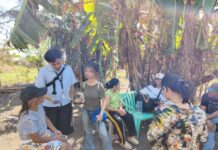
Madrid and his family cultivate spinach, eggplant, jute leaves (saluyot), and sweet potato leaves (talbos ng kamote) on their four hectares of land.
He harvests his crops every other week and earns P3,000 when the growth of his crops is abundant.
However, he added that profit varies sharply due to several factors, such as weather conditions, the seedling’s quality, market prices, and the influence of merchants or middlemen on the pricing of his harvest.
“The life of a farmer is full of sacrifices. Farmers don’t prosper; only those who buy from the farmers truly profit,” he lamented. “But here, at least, if you have vegetables, you can just buy rice and MSG and you will live.”
Despite this, Madrid expresses contentment with his life as a farmer in Upper Smokey Mountain.
“I went here not to build houses but to farm. I really enjoy farming. It is not so hard, especially for me, who plants vegetables. It is enough for you to eat,” he added.
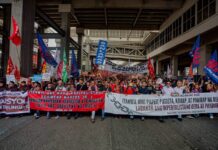
Facing the threat of their community being demolished, Madrid and the other residents refuse to yield and hold onto the hope that future generations of their families will still benefit from this farmland.
“If the people want to fight for it [their right to housing], why not just support them? They are doing it for a good cause. And I tell my youngest [Anora] this: you have nothing to lose if you try and fight for it, but you should just always stay safe,” he asserted.


