








Four decades after Kidlat Tahimik gave birth to Philippine independent cinema, 2016 was another year independent or indie films flourished. Spurred by numerous indie film festivals Cinemalaya, Cinema One, To Farm, etc. and with the new Metro Manila Film Fest (MMFF) selection criteria, indie films again prospered and in turn, hiked up the number and attention for Filipino films. From the Golden Age of Cinema to present, the number of Filipino films continue to dwindle (chiefly) as opposed to Hollywood and foreign films shown in our local cinemas. Save for the time indies gave their much-needed contribution to the industry and to Filipino heritage and culture. Because after all, there is only one Filipino movie industry and there could only be one Filipino cinema, mainstream and indie both a part of it. So, when/why do we make the distinction?
An independent film shown in the MMFF offered the proposition that “there is no longer mainstream vs. indie.” That would probably be best in terms of both being important contributors to pumping blood to the ever-relapsing Filipino movie industry. But this may also be true because, base on current practices as well, the indie and mainstream have melded and came up with features of a dominant-indie (big network/studio outfits putting up small/independent production outfits crossing to indie film themes and audiences) and a mainstream-indie (indie films gunning for mainstream film distribution reach), among others. How did this come about? We could only surmise that there remains a need for these films to rake in the box office. We could also then offer this to be the reason why the most films produced and the top-grossing films are those tagged as entertainment (but not necessarily entertaining).
And then there are times when we cannot make the distinction. Those are the times we lack the films that question the unjust order and the lack of social justice than just confirm poverty, uplift the people than highlight their oddities, unite the people towards a tenet of democracy—the good of the majority—than extol their differences. Sometimes this leads us to think that mainstream and indie may just differ in terms of studio outfit producing them (big or small), production budgets (big or small), actors part of the cast, distribution in commercial theaters, etc. But, in all fairness, indie films continue to be made because that is still where advocacies and causes are held to a light and come to the big screen.
While independent film is pushed as a new cinema, it must also learn from the big studio’s production mistakes to be the real change the industry needs. An exhausting, oppressive mainstream movie system took the lives of several film artists this year. In a TV interview, celebrated screen and stage actress Monique Wilson became the accidental spokesperson of an entire industry under caution. She has explained the drug abuse still prevalent with stars and crew alike, done to live up to the demanding working hours and conditions of the industry. Her statement (framed, edited and published to be pro-drugs much to the noise of the DDS) did not legitimize drug use but rather to consider it a deadly symptom of this ailing industry.
Meanwhile, the growing audiences for indie films must be noted. Brilliante Mendoza and Lav Diaz had limited audiences of cinephiles only a decade ago, but 2016 saw the commercial runs for MA ROSA, HELE SA HIWAGANG HAPIS and ANG BABAENG HUMAYO. Even Tarog’s HENERAL LUNA still enjoys meme-dominance since its 2015 screenings. Independent film also found home in campus screenings, with HERMANO PULI touring around the country.In addition, short films from University of the Philippines Film Institute and College of St. Benilde enjoyed successes in the festivals, producing a new breed of millennial filmmakers. Its past players Petersen Vargas and Gian Carlo Abrahan have now graduated from short to feature length. Meanwhile Baby Ruth Villarama, Jun Lana and Alvin Yapan were the toast of the industry’s newest major directors. To cap off the year, the MMFF 2016’s indie-dominated film selection was seen as a risky move for the film fest known as the money-milking hodgepodge of Vic, Vice & Company, but surprisingly this new MMFF broke grounds with huge box office attendance and overall positive public acceptance.
And at the end of this discourse, the discussion’s purpose shall be served. We present the top 10 Filipino films of 2016. In no particular order…
1. LOLA LOLENG (Che Tagyamon)
 Bright shades of red and purple assault the memories of a former comfort woman whose long-gone innocence filled the melancholic dilemma of a relevant past better off forgotten by the people who actually went through it. Tagyamon renders war trauma through a kaleidoscope of memorable images, making LOLA LOLENG not only a reminder to keep the relevant images at bay but also to pass it on to a millennial audience with a short, vicious attack of beauty and madness.
2. MA ROSA (Brillante Mendoza)
 Cannes’ best actress announcement was the inciting incident to an assumed “poverty porn” flick that surpassed the expectations of a typical Brillante Mendoza, proving he has more tricks under his sleeve – like y’know, simplicity. Much has to be admired in this family drama, with a straightforward narrative, and narrative devices that echo both Alfred Hitchcock and Lino Brocka. Of course, the cherry on top is Jaclyn Jose, who proves her clamored “Jaclyn Jose acting” was all an exaggerated response to the power of her restraint.
3. DIE BEAUTIFUL (Jun Lana)
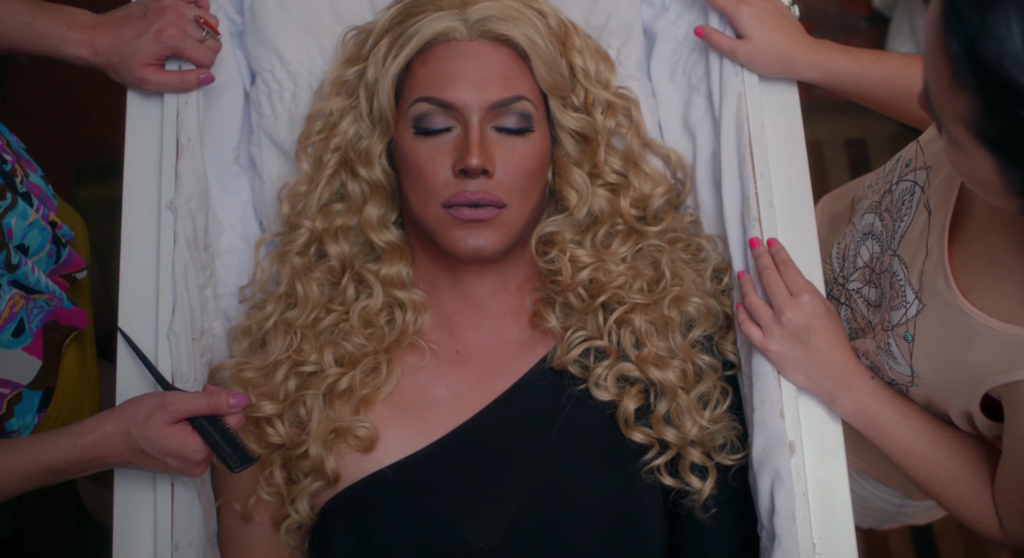 Along with SUNDAY BEAUTY QUEEN, it’s the jewel crown on top of the diverse MMFF 2016. A stellar cast of Paolo Ballesteros, Christian Bables, Gladys Reyes, Joel Torre, Lou Veloso and Luis Alandy headline this bittersweet comedy drama penned with humane deftness by Rody Vera and rendered with the subtle provocations of Jun Lana. Along with SUNDAY BEAUTY QUEEN, DIE BEAUTIFUL is also this generation’s ultimate beauty contest film – unveiling the make-up, the witty punchlines and the sequined dresses to see the battered fighter beneath. The warrior is a kontesera, and vice versa.
4. ANG MGA ALINGAWNGAW SA PANAHON NG PAGPAPASYA (Hector Calma)
 While Calma’s short film was released in 2015, ALINGAWNGAW revived interest in the Martial Law life during 2016’s most contradictory burial. With silent, haunting images of a radio, an empty house, a sinister game of patintero, of torture, dispersal and the silent worldweary visage of Alessandra de Rossi clearly on top form, ALINGANGAW is an elegantly brief but poignant look at “Bagong Lipunan”.
5. TUOS (Derrick Cabrido)
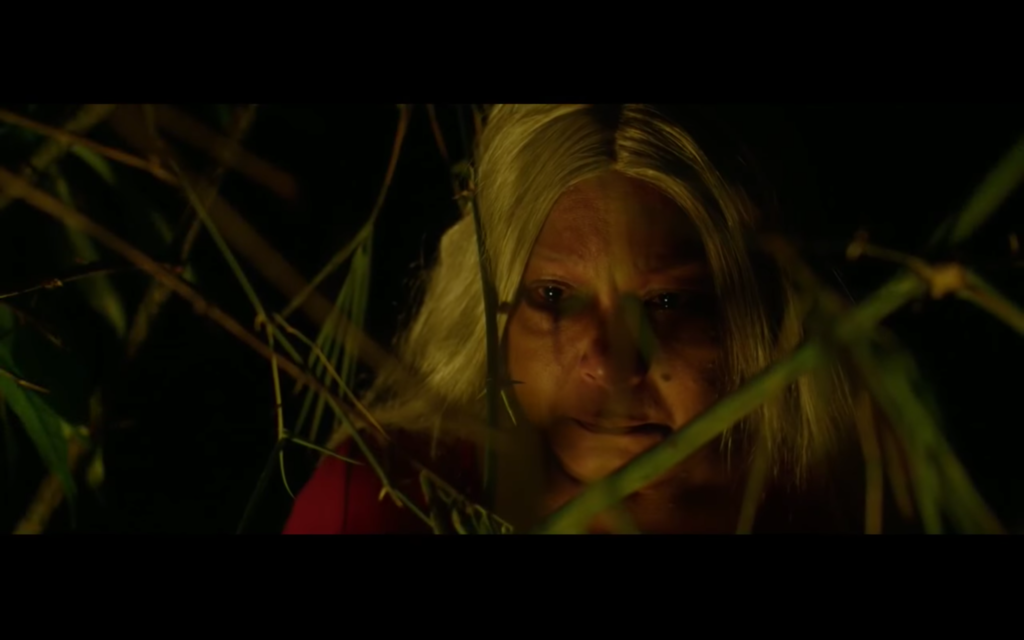 Derrick Cabrido’s drama works as both a character study between the old and new generation and as a mythical exploration of tradition, youth, curiosity, regrets and art. Barbie Forteza is unafraid to stand toe-to-toe with the Nora Aunor and their dynamics sizzles as the film unfolds in such a languid, ethereal and dream-like fashion. As Tuos comes into conclusion, it poses more questions than answers, which directs its viewers to reflect on what they have just witnessed. (Review by Kayo Jolongbayan)
6. PAMILYA ORDINARYO (Eduardo Roy Jr.)
 In Eduardo Roy Jr’s most daring film yet, he didn’t miss any opportunity to make his audience feel dirty, tensed and terrified in this suffocating yet raw melodrama. With Hasmine Killip and Ronwaldo Martin delivering some of the year’s best performances as the film’s central figures, this subtle yet hauntingly real drama is both provocative and poignant. With echoes of Bonnie and Clyde and The Graduate, Roy turns the murky reality into a vibrant yet rustic picture. (Review by Kayo Jolongbayan)
7. SUNDAY BEAUTY QUEEN (Baby Ruth Villarama)
 It must be said that SUNDAY BEAUTY QUEEN is the real surprise movie of the year. Not only was it a moving portrait of Overseas Filipino Workers (OFWs), it was surprisingly the unconventional choice for the MMFF Best Picture. And it rightfully is the best of that bunch. By focusing on the leisurely Sunday Beauty Contests in Hong Kong, Villarama juxtaposes the colorful background of the contests to the drab realities of domestic helpers that are not too distant to Rory Quintos’ ANAK or Lamasan’s MILAN. But come to think of it, its illegitimate sister DIE BEAUTIFUL also manages to do the same, with the two films revealing the two faces of escapist entertainment and the miserable realities women and the LGBT experience both at home and outside of it.
8. ANG BABAE SA SEPTIC TANK 2: FOREVER IS NOT ENOUGH (Marlon Rivera)
 Another MMFF entry, the film showcases an incisive observation and powerful parody of one of the movie industry’s most common fare, the romcom or romantic comedy movies. It picked apart the romcom so well that audiences would see what they usually see in these movies, but seeing them with different eyes. And of course, a Eugene Domingo-starrer Chris Martinez-penned film is expectedly a showcase of the comedic and acting prowess of possibly the best comedienne of today, again, Eugene Domingo, and possibly the best writer of comedy, again, Chris Martinez. With true comedies a rarity and slapsticks a-plenty, it felt so good to be laughing again.
9. SEKLUSYON (Erik Matti)
 While film audiences contended with the controversial theme and apparent message of the film, the handiwork of the master that is Erik Matti is undeniable and indelible as in his other recent acclaimed works On the Job (2013) and Honor Thy Father (2015). Deserving of its technical awards and in toto the directorial job on the film and its award, the MMFF entry was also a box office hit that was screened even long after the festival along with top-grosser Die Beautiful.
10. THE THIRD PARTY (Jason Paul Laxamana)
 The only mainstream film in the list is what the LGBT would say a “winnur.” Sam Milby and Zanjoe Marudo play lovers in the film while Angel Locsin plays the ex-girlfriend of Sam and the third wheel, not truly a third party. The stereo-type-breaking, gender-bender film (scorned woman giving full respect and understanding for her ex and his new boy love) portrayed a tender, enduring homosexual relationship not unlike a heterosexual relationship and all its affections and troubles. What’s more, the film grossed more than P 100 million pesos in the box office. If only, and hopefully, the rights of the LGBT in our society would earn as much (or more) support.


